
Singapore has become one of Asia’s most demanding conference environments for live production teams. The city-state hosts executive summits, regional sales kickoffs, investor briefings, medical congresses, technology launches, and government-facing forums that increasingly require a hybrid delivery model. That means one production system must serve a physical audience in the room, remote attendees on enterprise collaboration platforms, and stakeholders who expect broadcast-grade reliability. The result is a hardware stack that must be engineered for signal integrity, low latency, redundancy, and operational control from end to end.
For B2B event streaming, hybrid production is not a simple extension of webcast delivery. It is a multi-domain system that combines video acquisition, audio capture, switching, encoding, network transport, monitoring, recording, and platform integration. In Singapore, the stakes are elevated by the prevalence of high-profile corporate events in convention centers, hotels, ballrooms, and purpose-built experience venues, where uptime, clarity, and professional presentation are expected. The essential hybrid tech stack is therefore less about individual devices and more about how each layer interacts across SDI, HDMI 2.1, NDI, Secure Reliable Transport (SRT), Real-Time Messaging Protocol (RTMP), and cloud or on-premise control paths.
A robust conference build starts with the assumption that failure is inevitable unless redundancy is designed into the workflow. That means dual-path signal distribution, encoder failover, backup internet connectivity, isolated audio routing, and monitored program return paths. It also means selecting hardware that can support 1080p60 or 2160p30 workflows where appropriate, with enough headroom for dynamic content, presentation capture, keynote camera feeds, audience Q&A, and remote speaker integration through Microsoft Teams, Zoom, or Webex. For enterprise clients in Singapore, the technical objective is consistent, intelligible, and secure transmission of the event experience across multiple endpoints without compromising the in-room production standard.
1. Camera Acquisition and Multi-Camera Production Architecture
Any hybrid conference system begins with image acquisition. Corporate events require more than a single locked-off camera, because stakeholder communication depends on perspective changes, presenter isolation, audience reaction coverage, and graphics support. A typical enterprise configuration uses a multi-camera topology with at least two to four production cameras, depending on venue scale and agenda complexity. Camera selection should be based on sensor performance, low-light behavior, output options, and control compatibility rather than marketing claims.
Sensor, output, and connectivity considerations
For conference use, professional camcorders, compact cinema cameras, and PTZ cameras each have a place. PTZ, or pan-tilt-zoom, systems are efficient for overflow rooms, breakout rooms, and overhead positions where remote control is essential. Fixed cameras with SDI outputs remain the backbone of many production rooms because Serial Digital Interface offers reliable point-to-point transmission with robust locking connectors and predictable latency. HDMI 2.1 can be used at short distances for presentation devices and some camera outputs, but for core production paths, SDI remains preferred due to locking connectors and longer cable runs. In larger venues, 3G-SDI or 12G-SDI may be used depending on whether the production is 1080p or 4K/UHD.
Networked video has become increasingly relevant in hybrid production. NDI, including NDI|HX in bandwidth-sensitive environments, allows IP-based camera transport and flexible routing over managed networks. However, NDI should be deployed with careful attention to switch capacity, VLAN segmentation, multicast design, and end-to-end bandwidth planning. In a conference environment with multiple cameras, confidence monitors, and recording endpoints, unmanaged IP video traffic can create congestion and instability. The technical standard should be an isolated production network with controlled QoS, dedicated switching, and clear firewall policies.
Shot design and program structure
At a corporate conference, the camera package should support a program feed that is visually efficient and cognitively clear. A production director typically needs a wide stage safety shot, a medium keynote shot, a presentation capture angle, and a roving or audience camera for interaction segments. If the event includes panel discussions, each participant should have dedicated framing or a managed PTZ preset system. This enables clean cutaways and avoids overreliance on digital zoom. ISO recording, meaning isolated recordings of each camera source, is also highly recommended. ISO files support post-event editing, internal review, compliance documentation, and content repurposing without dependence on the final live cut.
For enterprise events in Singapore, where post-event deliverables often feed internal communications, regional sales enablement, and marketing archives, ISO recording is not a luxury. It is a workflow requirement. The recording system should capture the program mix plus each isolated source in a synchronized timecode environment where possible.
2. Video Switching, Graphics, and Presentation Integration
The switching layer determines how the event is experienced by both in-room and remote participants. A professional hybrid stack must integrate live cameras, presentation laptops, remote guest feeds, and media playback into a single managed production environment. Hardware switchers from broadcast and professional AV ecosystems support this with multiview monitoring, upstream keyers, downstream keyers, macros, media players, and auxiliary outputs.
Switcher architecture and signal management
The most common technical configuration uses an SDI or hybrid SDI and HDMI production switcher, paired with external signal conversion for presentation sources. Conference laptops often output HDMI, while cameras and long-run sources typically use SDI. Where signal translation is required, high-quality converters must preserve frame rate, color space, and audio embedding. The production switcher should support the chosen delivery format, commonly 1080p50, 1080p60, or in some premium applications 2160p30. The deciding factor is not simply resolution, but whether the venue infrastructure, content design, and delivery platform justify the added bandwidth and complexity of 4K/UHD.
Graphics integration is essential for branded corporate communication. Lower thirds, speaker identification, sponsor slides, agenda timers, and remote question prompts should be integrated into the live switcher or graphics engine. For conference use, graphics systems must be operator-friendly, support rapid updates, and sync cleanly with the director’s cues. A well-designed system also includes preview confidence monitoring so the technical director can verify title placement, safe areas, and presentation legibility before transmission.
Presentation capture and content ingest
Enterprise conference rooms often require capture of PowerPoint, Keynote, browser-based dashboards, or live application demos. These sources should be routed through a presentation switcher or capture appliance rather than direct consumer adapters. For mission-critical events, the presentation path must be tested for EDID negotiation, color range consistency, refresh-rate compatibility, and USB-C to HDMI or USB-C to SDI conversion quality where applicable. Presentation capture failures are among the most common causes of hybrid event disruption, especially when a guest laptop changes output resolution during the session.
To mitigate this, production teams should standardize on tested source resolution, ideally matching the house switcher format before the event. The operator should maintain a known-good presentation laptop or fallback media source with local copies of essential slides. That fallback path should be accessible even if a presenter’s device fails to authenticate on the venue network.
3. Audio Infrastructure, Mixing, and Talkback Control
Audio is the primary quality indicator for remote participants. In a hybrid conference, a visually polished program with poor audio is still perceived as a failed production. The audio subsystem must therefore be treated as a priority layer, with proper gain staging, echo control, and routing flexibility for stage microphones, presentation playback, remote guests, and room reinforcement.
Microphone strategy and signal chain
Conference audio commonly combines wireless handheld microphones, lavalier microphones, podium microphones, boundary microphones, and audience capture units. The exact mix depends on agenda format, room geometry, and the need for hands-free presenter movement. Wireless systems should be coordinated to avoid RF conflicts, with attention to frequency coordination and venue-specific spectrum conditions. Audio should be fed into a digital mixer capable of handling multiple mixes, including a front-of-house feed for the room, a dedicated program mix for stream, and optional communication mixes for interpreters or breakout rooms.
The stream mix should not be identical to the house mix. Remote participants need a balanced program feed with speech intelligibility prioritized over room ambience. This often requires independent equalization, compression, automatic mixing on open microphones, and carefully managed audience mic inclusion. Acoustic echo cancellation becomes relevant when remote guests are brought into the room through loudspeakers or when hybrid Q&A is conducted via conferencing platforms. The audio engineer should ensure that return audio from Teams, Zoom, or Webex is separated from the live program path to avoid feedback loops.
Talkback, comms, and operational control
For technical coordination, talkback systems are essential. Director-to-camera, director-to-audio, and stage manager communications must remain discrete from program audio. Clear communication reduces operator error and supports rapid transitions between speakers, playback, and remote interventions. In larger conference builds, intercom systems can be integrated with camera tally, mixer cues, and device control panels to maintain disciplined production timing.
In Singapore venues where multiple rooms may be active simultaneously, comms discipline is especially important. Breakout rooms, plenary stages, and satellite installations may share a common production control team. A clear communication hierarchy and labeled routing structure prevent confusion during fast changes or high-pressure executive segments.
4. Encoding, Protocols, and Network Transport for Enterprise Streaming
The encoding and transport layer determines whether the conference reaches remote participants reliably and at acceptable quality. This is where enterprise streaming distinguishes itself from simple webcasting. The production team must choose the right codec, bitrate, protocol, and network architecture for the venue and audience profile.
Codec and bitrate planning
For corporate event streaming, H.264 remains the most universally compatible codec for RTMP and RTMPS delivery, while H.265, also called High Efficiency Video Coding or HEVC, offers bandwidth savings where platform support and decoder compatibility are assured. For broad enterprise reach, 1080p30 or 1080p60 streams often deliver the best balance of motion handling and bandwidth efficiency. Typical bitrate planning depends on content complexity, camera motion, and platform constraints. A program stream for 1080p30 may operate in the 4 to 8 Mbps range depending on quality targets, while 1080p60 or 4K workflows require proportionally higher bandwidth and tighter encoder management.
Latency must be matched to event format. Interactive hybrid sessions, panel discussions with remote speakers, and live Q&A often require lower end-to-end latency than keynote broadcasts. SRT is valuable here because it provides secure, resilient transport over unpredictable networks while handling packet loss more gracefully than simple UDP paths. RTMP remains useful for platform ingest due to its compatibility, but for contribution between venue and control center, SRT is frequently the stronger operational choice. Where maximum reliability is required, some teams use SRT contribution into a central encoder or cloud gateway, then RTMP or HLS for distribution to attendees.
Network design, QoS, and redundancy
Professional event streaming in Singapore should run over a dedicated managed network with appropriate Quality of Service, or QoS. Production traffic, control traffic, and general venue internet access should be segmented through VLANs to prevent contention. Switches should have sufficient backplane capacity, low latency forwarding, and support for link aggregation where necessary. Critical devices such as encoders, streaming laptops, and NDI receivers should be cabled directly where possible rather than relying on Wi-Fi, which should be reserved for auxiliary control, admin access, or non-critical guest services.
Redundancy strategy must include dual internet uplinks, preferably from separate circuits or providers when the venue allows. If only one venue circuit is available, bonded connectivity or a cellular backup route should be prepared as a failover path. Streaming encoders should support dual-stream output, backup recording, and rapid handoff to a secondary platform destination. A healthy production design assumes that the primary path can fail and ensures the event still reaches the audience with minimal interruption.
Cloud-based versus on-premise delivery
Cloud streaming platforms offer scalability, remote switching, and distributed accessibility. They are highly effective for multi-region audiences, especially when global stakeholders need access from Singapore, Australia, Japan, Europe, and North America. On-premise systems, however, remain indispensable when venues require full local control, sensitive content handling, or integration with internal security policies. Many enterprise conferences use a hybrid model, with local switching and encoding at the venue, then cloud distribution for audience delivery and archive workflows.
The decision should be based on latency requirements, data governance, and operational risk. On-premise control can reduce dependency on external services during the live event. Cloud systems can improve collaboration, monitoring, and scalability. For many Singapore corporate conferences, the most resilient architecture combines local production hardware with cloud-based failover and remote monitoring.
5. Monitoring, Recording, and Reliability Engineering
Monitoring is the difference between a controlled event and an uncontrolled incident. Every essential signal path should be visible to the production team through multiview monitoring, waveform analysis, confidence audio, and platform health dashboards. Program output, clean feed, encoder status, network throughput, and remote return audio should all be checked continuously during the live session.
Multiview and scope-based verification
Multiview monitoring gives the technical director a single visual reference for all critical sources. This should include cameras, presentation feeds, graphics sources, remote guests, program output, and return feeds. For color-sensitive events, a waveform monitor and vectorscope are valuable for checking luminance, chroma, and legal signal levels. This is particularly relevant when stage lighting changes during keynote transitions or sponsor segments. The production team should also confirm that audio peaks remain controlled and speech intelligibility remains stable across all speaker changes.
Recording, archive, and compliance
Conference recording should be captured in at least two forms, the live program and, where practical, isolated sources. Recording formats should preserve quality for post-production, internal training, and compliance. In regulated sectors such as finance, healthcare, or public sector communications, archive retention and access control may be as important as the live transmission itself. Storage should be provisioned with enough headroom for high-bitrate recording and extended conference duration. Redundant local storage plus synchronized offload to secure cloud or network storage is the preferred model.
Operational run sheets and failover discipline
Hardware alone does not guarantee stability. The production workflow must include signal testing, encoder verification, backup media, known-good cables, spare power supplies, and documented escalation paths. Before doors open, every camera, microphone, source, encoder, and destination should be exercised through a structured technical rehearsal. A complete Singapore conference setup should also verify local power conditioning, uninterruptible power supply coverage, and room cooling for racks and encoders. Thermal instability is a real risk in dense AV environments, especially when equipment is located in confined control booths or temporary staging areas.
The most reliable hybrid productions are built around predictable procedures. The engineering team should define primary and backup signal paths, confirm who can switch to failover, and set criteria for intervention if stream health degrades. These practices reduce downtime and protect the client’s reputation during high-visibility events.
Implementation Guidance for Singaporean Enterprise Conferences
For corporate planners, IT directors, and AV managers in Singapore, the practical approach is to treat hybrid event infrastructure as a miniature broadcast system with enterprise controls. Start with the venue’s signal layout, then map source devices, transport methods, audio routing, and platform integration. Specify cameras with the output standard required for the production format. Use SDI where long-form reliability matters, reserve HDMI for short presentation runs, and deploy NDI only inside managed production networks. Pair a capable video switcher with a digital audio mixer that supports separate stream mix creation. Use SRT for secure contribution when network conditions are variable, and RTMP or RTMPS for platform delivery when compatibility is required.
Just as important, build redundancy into every critical layer. Use backup encoding, dual internet, spare microphones, redundant power, and alternate presentation sources. Confirm that Microsoft Teams, Zoom, or Webex integration has been tested with the actual event topology, not only in a lab. If the event includes executive remarks, investor messaging, or regional town hall communication, validate the entire chain from stage microphone to remote attendee playback with the same discipline used in professional broadcast operations.
The hybrid tech stack for Singapore conferences is ultimately defined by precision. A successful build aligns hardware, protocols, routing, and monitoring into a dependable workflow that supports in-room impact and remote reach at the same time. When the system is engineered correctly, the audience sees a polished conference. What they do not see is the disciplined infrastructure underneath it, the cameras, switchers, encoders, network paths, audio matrices, and failover layers that make enterprise-grade hybrid delivery possible.
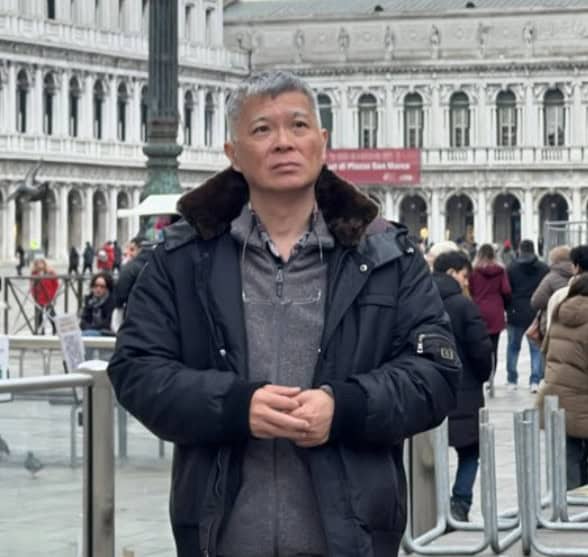
Michael Koh is a production specialist and entrepreneur who founded Spring Forest Studio in 2017 to provide event and virtual production solutions in Singapore. He specialises in hybrid live streaming, XR (Extended Reality) virtual production, and studio systems integration, transitioning the business from traditional videography to advanced corporate broadcasting. Operating out of a dedicated facility at NordCom2 in Singapore, he leads a technical crew to deliver multi-camera webcasts, digital sets, and technical consultations for large-scale corporate events.