
A virtual gala built with extended reality, or XR, is no longer a novelty format for corporate fundraising, executive briefings, product launches, and brand celebration events. In the enterprise streaming environment, XR enables a hybrid production language that combines live camera acquisition, real-time graphics compositing, virtual environments, and low-latency distribution into a single broadcast-grade workflow. For corporate event planners, AV integrators, production managers, and IT directors, the challenge is not simply visual spectacle. The challenge is to preserve the polish, pacing, and emotional resonance of a gala while engineering a signal chain that is resilient, synchronized, and scalable across physical and remote audiences.
The difference between a conventional webcast and a true virtual gala lies in production architecture. A webcast typically prioritizes distribution. A virtual gala requires a complete end-to-end system: multi-camera capture, switcher control, talent monitoring, program and clean-feed management, audio mixing and conferencing integration, graphics engines, return video, redundant encoders, and a network design that can sustain deterministic throughput. When XR is used properly, the production can layer volumetric visual design, LED wall virtual sets, chroma key compositing, and real-time motion graphics without sacrificing broadcast discipline. The result is an event experience that feels premium on-screen and operationally controlled behind the scenes.
XR as a Production Framework for Premium Hybrid Events
Extended reality in event production includes augmented reality, virtual reality, and mixed reality techniques, but in the context of a virtual gala, the practical focus is on real-time virtual set rendering and live compositing. XR commonly combines physical presenters with digital environments through camera tracking, keying workflows, and engine-based graphics platforms. The technical objective is to create a unified stage language that can be delivered to in-room attendees on LED displays and to remote viewers through a streamed program feed.
Virtual Sets, LED Volumes, and Camera Tracking
Virtual gala environments can be built using green screen or blue screen keying, or through LED volume approaches that place presenters inside a rendered background. Green screen remains efficient for many corporate productions because it requires less physical infrastructure than a full LED wall and allows flexible scene changes. However, it demands careful control of spill, edge separation, wardrobe selection, and lighting ratios. LED volume workflows reduce keying complexity and can enhance interactive realism, but they require greater investment in pixel pitch, genlock alignment, processing, and stage calibration.
Camera tracking is essential when the virtual environment must preserve perspective as the camera moves. Systems typically rely on optical, mechanical, or hybrid tracking to feed position and lens metadata into the render engine. Lens calibration, focus data, and latency compensation are critical because any mismatch between camera move and rendered scene creates visual drift. In a gala environment, drift is immediately noticeable, especially when presenters are framed against architectural virtual sets, animated chandeliers, or branded environments.
Rendering Engines and Real-Time Graphics Integration
Real-time engines used in enterprise XR productions must support predictable frame pacing, synchronized video outputs, and genlocked rendering where required. The production team often integrates graphics systems for lower thirds, sponsor panels, motion backgrounds, live captions, speaker names, and applause or donation triggers. The practical requirement is not visual complexity alone, but cue reliability. A luxury gala format may include animated transitions, immersive title sequences, and scene-based reveals, yet every graphic must be recalled accurately from the show rundown and synchronized to the director’s switching logic.
To preserve elegance, operators should design the virtual set with spatial restraint. High-density motion graphics can obscure the keynote speaker or distract from award presentations. In enterprise settings, clean composition, disciplined color management, and a controlled palette are more effective than visual overload. The most successful XR gala deployments mirror the standards of broadcast award shows, not consumer entertainment streams.
Signal Flow, Routing Architecture, and Broadcast-Grade Switching
A virtual gala lives or dies on signal integrity. Even a visually polished XR environment fails if camera feeds, return video, and talent monitors are not engineered with broadcast principles. The core signal chain typically begins with camera acquisition, passes through conversion and routing, and lands in a production switcher capable of handling program, preview, key, and auxiliary outputs. In enterprise environments, the design must also account for ISO recording, confidence monitoring, intercom, and backup paths.
Multi-Camera Acquisition and Switching Systems
Most corporate gala productions use a multi-camera configuration that may include a wide master, medium speaker shot, close-up camera, audience reaction camera, and a dedicated graphics or stage utility position. Depending on venue size and production budget, cameras may output over SDI, HDMI 2.1, or IP-based transport, although SDI remains dominant in many professional event builds because of its predictable latency and robust cabling characteristics. 3G-SDI supports 1080p workflows, while 12G-SDI can carry 4K/UHD signals over a single coaxial path when the infrastructure and distance requirements are properly engineered.
The switcher must support upstream keying, downstream keying, multiview monitoring, and aux routing. For virtual gala use cases, the production mixer may need separate feeds for the in-room LED wall, the streaming program output, and the IMAG feed for the physical venue. Clean switching discipline is essential when remote speakers are integrated through conferencing platforms because speaker latency and lip sync must be compensated before entering the live program.
ISO Recording and Redundancy Planning
ISO recording, the independent recording of each camera source, is a standard best practice for enterprise events. If a line cut is compromised by a graphics error or timing issue, the editor can reconstruct the event from isolated sources. This is especially valuable for executive galas where post-event highlight deliverables, compliance clips, and archival assets are expected. Redundancy should extend beyond recording. Critical gala workflows require backup program recording, spare encoder paths, failover networking, and a defined recovery plan for switcher, tracking, and graphics systems.
For mission-critical events, the production design should include dual power feeds, UPS protection, redundant network uplinks, and a documented escalation chain. The goal is not only to reduce the probability of outage, but to preserve service continuity if a device, cable run, or transport path fails mid-show.
Network, Encoding, and Distribution Infrastructure for Enterprise Streaming
Distribution architecture determines whether a virtual gala reaches internal stakeholders, customers, and external guests with consistent quality. The production team should distinguish clearly between contribution transport and audience delivery. Contribution feeds move signals from venue to control room, control room to remote talent, or control room to cloud production nodes. Audience delivery moves the final program to viewers through secure streaming platforms, corporate portals, or enterprise collaboration systems.
RTMP, SRT, and Managed Contribution Paths
RTMP, or Real-Time Messaging Protocol, remains common for publishing to many streaming endpoints, although its design is older and less resilient under adverse network conditions than newer contribution protocols. RTMPS adds TLS encryption, which is useful when security policy requires encrypted ingest. SRT, Secure Reliable Transport, is widely used in enterprise event workflows because it adds packet recovery, jitter management, and encryption while supporting variable network conditions. For gala productions with remote presenters, SRT often outperforms plain RTMP on unreliable circuits or when traversing the public internet.
When a virtual gala is hosted across offices, hotels, or regional studios, bandwidth planning becomes non-negotiable. A 1080p program stream may operate comfortably at a few megabits per second depending on codec settings, while 4K/UHD delivery requires significantly more throughput and tighter encoder tuning. H.264 remains broadly supported, while H.265, also known as HEVC, can improve efficiency in some delivery scenarios, subject to decoder compatibility and platform support. The selected codec should align with enterprise playback requirements, not just theoretical compression efficiency.
Cloud-Based vs On-Premise Streaming Architectures
Cloud production offers scale, remote collaboration, and geographic resilience. It is attractive for multi-site corporate galas, especially when stakeholders are distributed across Singapore, Southeast Asia, and international offices. Cloud systems can consolidate switching, graphics, and contribution ingestion into a managed environment, reducing on-site hardware footprint. However, the cloud model depends on stable uplink connectivity, endpoint compatibility, and disciplined latency management.
On-premise streaming remains preferred when absolute control over routing, security, or venue integration is required. This is common in financial services, government-adjacent, and regulated enterprise environments where data governance is strict. On-premise systems can integrate directly with local cameras, switchers, hardware encoders, and venue networks, but they require more engineering labor and onsite support. Many high-end virtual galas use a hybrid model, with local acquisition and switching on-site, then cloud-based distribution and redundancy layers for audience delivery.
Audio, Lip Sync, and Interoperability with Hybrid Collaboration Platforms
Elegant visual presentation cannot compensate for poor audio. In fact, premium corporate audiences judge event quality more harshly by audio clarity than by video resolution. A virtual gala must therefore be engineered with disciplined microphone strategy, stable gain structure, clean mix-minus feeds, and accurate lip sync across all outputs. Typical audio sources include podium microphones, wireless lavaliers, handhelds for award presenters, playback channels for stings and walk-up music, and remote contribution audio from platform guests.
Audio Mixing, Monitoring, and Delay Compensation
The audio console should support multiple buses, direct outs, and matrix outputs to accommodate program, IFB, talkback, and record feeds. Talkback systems are especially important in XR environments because camera operators, stage managers, and talent wranglers need a reliable communication path without contaminating the program mix. Audio delay must be aligned with video delay introduced by scaling, switching, graphics insertion, and encoder processing. Even small mismatches become visible during live speeches or applause moments.
For hybrid gala integration with Microsoft Teams, Zoom, or Webex, the production team should define a dedicated ingest and return strategy. Remote participants should not be routed through casual meeting-room audio assumptions. Instead, the workflow should use controlled conference audio, echo cancellation, and clearly defined mix-minus routing so remote speakers hear the event cleanly while their own audio is prevented from looping back into their return path. When possible, a dedicated conferencing bridge or production-managed remote contribution service is preferable to a standard meeting link because it allows tighter operational control.
Signal Standards and Venue Interoperability
SMPTE standards continue to underpin professional event production, especially for video transport and timing references in broadcast-oriented environments. Timecode and genlock are useful when multiple cameras, replay systems, and graphics engines must remain aligned. In large venues or multi-room gala setups, disciplined synchronization reduces artifact risk and keeps frame-accurate switching possible. HDMI 2.1 can be useful for short-run device connectivity, but long-distance venue distribution still favors SDI or IP video transport engineered for professional use. NDI, Network Device Interface, including NDI|HX variants, can simplify IP-based routing in controlled LAN environments, although it must be deployed with careful bandwidth planning and switch configuration to avoid congestion.
Operational Design, Reliability, and Deployment Guidance for Enterprise Clients
From a systems engineering standpoint, a virtual gala should be treated as a live broadcast operation with hospitality-grade presentation standards. The difference is in the choreography. Every cue, transition, and speaker entrance must be aligned to the technical plan, not improvised in the moment. A professional implementation starts with a show flow document, signal map, network diagram, and redundancy matrix. These documents should specify source count, resolution, frame rate, audio bus allocation, encoder settings, backup paths, and venue dependencies well before load-in.
Recommended Implementation Practices
- Use a documented production topology with labeled video, audio, and network paths from camera to encoder.
- Keep the program chain as short as practical to minimize latency before streaming or recording.
- Apply color calibration across cameras, key backgrounds, LED walls, and graphics engines so the virtual environment remains coherent.
- Test remote guest workflows with the exact conferencing or contribution platform that will be used during the show.
- Establish a redundant encoder path and validate failover before doors open.
- Monitor uplink stability, packet loss, and end-to-end latency throughout rehearsal and live operation.
- Record ISO sources, program output, and, where required, a separate clean feed for post-event editing and compliance archives.
For corporate clients operating in Singapore and across regional hubs, venue connectivity and compliance expectations often influence the technical design. Enterprise-grade events in business districts or hotel ballrooms may require coordination with venue IT, managed circuits, and firewall exceptions for contribution protocols such as SRT or RTMPS. The engineering team should confirm allowed ports, NAT traversal constraints, and content delivery platform requirements well in advance. This prevents last-minute network policy conflicts that can jeopardize the live show.
The most effective virtual gala productions blend theatrical polish with broadcast engineering discipline. XR gives the event creative range, but only a stable infrastructure makes that creativity reliable at scale. When the camera chain, render engine, switcher, audio matrix, encoder stack, and network transport are all designed as one system, the result is a premium digital event that preserves the elegance of a gala while meeting enterprise expectations for security, redundancy, and quality control.
For organizations planning a high-profile hybrid gala, the recommended path is to engage production engineering early, validate the full signal chain in rehearsal, and design every workflow around audience experience, operational resilience, and measurable technical quality. That approach ensures the virtual format does not feel like a compromise. It feels like a meticulously produced broadcast event built for the corporate stage.
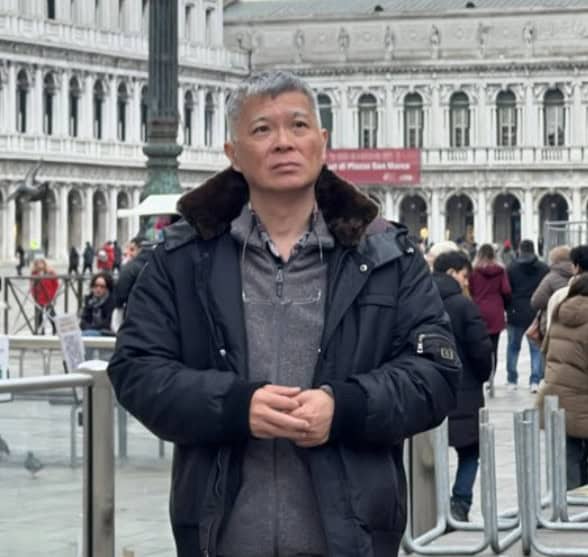
Michael Koh is a production specialist and entrepreneur who founded Spring Forest Studio in 2017 to provide event and virtual production solutions in Singapore. He specialises in hybrid live streaming, XR (Extended Reality) virtual production, and studio systems integration, transitioning the business from traditional videography to advanced corporate broadcasting. Operating out of a dedicated facility at NordCom2 in Singapore, he leads a technical crew to deliver multi-camera webcasts, digital sets, and technical consultations for large-scale corporate events.