
Virtual Q&A has become a core interaction layer in enterprise hybrid events, board meetings, internal town halls, product launches, analyst briefings, and association conferences. When the audience is split between an in-room contingent and a remote cohort connected through a webcast or meeting platform, question handling becomes a production discipline, not just a moderator task. Without a structured workflow, question queues become fragmented, duplicate submissions multiply, and high-value executive questions are buried beneath repetitive or low-priority prompts. Up-voting and categorisation tools solve that problem by turning audience input into an ordered, searchable, and operationally manageable data stream that can be integrated into the live production workflow.
For corporate event planners, AV professionals, production managers, IT directors, and enterprise decision-makers, the value is not only audience engagement. It is operational control. Well-implemented Q&A tooling reduces moderation overhead, improves editorial selection, supports bilingual or multi-track sessions, and creates a more predictable communication layer between presenters, producers, and attendees. In a hybrid environment, the Q&A stack must also coexist with the broader technical architecture, including the encoder, the platform ingest path, the network edge, the cloud distribution layer, and the confidence monitoring system used by the technical director and show caller.
Up-voting and categorisation are most effective when they are treated as part of the event signal chain. The audience submits questions through the event application or embedded conference platform. Those questions are ingested into a moderation interface, tagged by topic, ranked by voting activity, and routed to the producer or moderator with enough metadata to support live decision-making. For large-scale corporate events, this workflow reduces friction at the exact moment when timing matters most, during keynote transitions, executive panels, and interactive sessions where speaker pacing is tightly controlled.
Why Up-Voting and Categorisation Matter in Hybrid Event Production
The technical challenge in live Q&A is not simply collecting questions. It is preserving signal quality in a high-volume, low-latency environment. In a session with hundreds or thousands of remote attendees, a freeform question stream can quickly become unmanageable. Up-voting introduces a distributed relevance filter. Categorisation adds editorial structure. Together, they help the production team surface the most relevant items while maintaining visibility into the thematic distribution of audience interest.
From a production standpoint, this is analogous to signal routing in a broadcast control room. Raw input is abundant, but only selected sources are passed to program. The Q&A tool acts as a control layer, sorting audience intent into categories such as product functionality, pricing, implementation, compliance, roadmap, technical architecture, or regional availability. For enterprise events, this is especially important when the audience includes multiple stakeholder groups with different informational priorities. An IT director may care about SSO integration, API availability, and data residency. A procurement lead may focus on licensing and SLA terms. An executive attendee may prioritize strategic outcomes and ROI. Up-voting makes those audience priorities visible in real time.
Editorial Control in a Live Production Environment
In a professional hybrid production, the moderator is often working alongside a technical director, webcast producer, audio engineer, and platform operator. The question queue needs to be structured enough to support rapid selection without interrupting the show. Category labels should be concise, consistent, and mapped to the event agenda. For example, a product launch may use categories such as Product Features, Security, Integrations, Deployment, and Commercials. A medical or regulated industry event may need more granular taxonomy, such as Clinical Use Cases, Regulatory, Workflow, and Data Governance. The goal is to create an information architecture that mirrors the session design and the speaker panel composition.
In practice, moderation interfaces should support sorting by vote count, submission time, category, and status. Status control is critical. Questions often move through stages such as New, Reviewed, Pinned, Answered, Deferred, or Duplicate. This workflow prevents redundant queries from consuming time on the main program feed. It also allows moderators to pre-stage questions for an executive speaker or subject-matter expert without exposing the entire question backlog on screen.
Technical Architecture for Enterprise Q&A Platforms
Effective Q&A tooling sits inside a broader event technology stack that includes identity management, session scheduling, content delivery, analytics, and moderation controls. In enterprise deployments, the Q&A system should support secure authentication, role-based access control, session scoping, and API integration with the event platform or custom front end. The system must also scale horizontally for high-attendance sessions without introducing latency or interface instability.
For hybrid event production, the workflow usually begins at the attendee device, then traverses the event application or web portal, the cloud Q&A service, and the moderator dashboard. If the event uses Microsoft Teams, Zoom, or Webex for collaboration-style participation, the Q&A layer may be native to the platform or integrated through an adjacent engagement tool. In more controlled enterprise environments, a dedicated event platform is preferable because it allows richer categorisation, advanced moderation controls, and session-level analytics.
Latency, Sync, and Reliability Considerations
Question submission latency is not generally governed by broadcast transport standards such as RTMP, SRT, or NDI, because Q&A is usually application-layer traffic. However, the entire user experience is still dependent on low-latency session synchronization between the platform, the encoder, and the playback layer. If the audience sees a delayed program feed, the Q&A timing shifts, and moderators may receive questions based on content that the remote audience has not yet fully seen. In a tightly timed corporate webcast, this can create confusion. The production team should align the session timing model so the video stream latency, chat delay, and Q&A visibility are consistent across platforms.
For distribution, RTMP and RTMPS remain common for ingest into streaming platforms, while SRT, Secure Reliable Transport, is widely used for contribution links where packet loss, jitter, or unstable last-mile conditions must be managed more effectively. NDI and NDI|HX are often used inside the venue for IP-based production and camera routing, especially when the control room uses a software-defined workflow. The Q&A layer does not replace these transport methods, but it must be designed to operate cleanly alongside them, with no dependency on unstable local web traffic or congested Wi-Fi segments.
In high-density conference environments, the wireless network must be engineered with enterprise-grade access point density, proper RF planning, and adequate quality of service, or QoS, to ensure attendees can submit questions reliably from mobile devices. VLAN segmentation for guest traffic, separate SSIDs for production and attendee access, and firewall rules that permit only the required application endpoints are standard practice. If the audience is large, captive portal design and session authentication must be tested under load before the event day.
Designing a Moderation Workflow That Supports Live Decision-Making
The best Q&A implementation is one that gives the moderator more than a list of questions. It gives them production intelligence. This includes tagging, voting history, author metadata where permitted, timestamp alignment, and the ability to filter by audience segment if the platform supports it. For executive events, the moderation console should also support private notes for the producer so the team can prepare speaker handoff, identify duplicated themes, or suppress irrelevant submissions before they reach the live floor.
Categorisation Models That Actually Work
Category design should be driven by the event objective, not by the software defaults. A technical product briefing may use a functional model with categories such as Architecture, Security, Deployment, Integration, Performance, and Support. A financial services town hall may need Employee Policy, Strategy, Operations, Compliance, and Regional Updates. A healthcare or life sciences forum may require categories such as Clinical Workflow, Data Privacy, Interoperability, and Regulatory Questions. The ideal taxonomy is mutually exclusive enough to reduce ambiguity, but broad enough to keep the queue manageable.
From an operational perspective, do not over-engineer the category list. Too many categories reduce usability and create incorrect tagging. A practical design usually falls between five and ten categories for a session of standard complexity. If the event contains multiple tracks or breakout rooms, the taxonomy can be session-specific, which improves both searchability and post-event analytics.
Vote counts should be visible, but not allowed to dominate moderation decisions entirely. Up-voting is a useful signal, yet enterprise events often require strategic question selection beyond simple popularity. A highly voted question may be repetitive or partially answered already, while a lower-voted question from a key stakeholder group may be more relevant to the speaker or the business objective. Skilled moderators balance popularity with relevance, audience mix, and agenda alignment.
Integration with Production Infrastructure and Live Event Systems
Virtual Q&A does not live in isolation. It must integrate with the show control environment, content playback systems, and downstream analytics stack. In a hybrid production, the audience-facing application may feed a moderation dashboard on a producer workstation, while the show caller manages pacing through intercom or talkback systems. If a question is selected for live display, it may be pushed to a lower-third graphics system, an IMAG, image magnification, screen, or a live speaker confidence monitor. That display path must be tested to ensure legibility, font sizing, and safe-area compliance.
For multi-camera productions, the technical team may need to coordinate question display with camera cuts, speaker transitions, and slide content. The graphics operator should be able to trigger question overlays without disrupting the program feed. In a studio or ballroom environment, this often means integrating the Q&A tool with a graphics engine, a media server, or a switcher workflow that supports external data input. The result is a polished, broadcast-style interaction layer that feels intentional rather than improvised.
Cloud-Based versus On-Premise Deployment Models
Cloud-based Q&A services are attractive because they scale quickly, require minimal local infrastructure, and simplify support for distributed audiences. They are often ideal for short-duration webinars, global all-hands meetings, and externally facing corporate events. On-premise or private-cloud deployments are better suited to organizations with strict data governance requirements, regional compliance obligations, or integration needs tied to internal identity systems and network controls.
For enterprise clients operating in Singapore or serving APAC audiences, data residency, access governance, and network peering should be reviewed early. If the event includes regulated content, legal review may require that question logs, analytics, and attendee metadata remain in a defined jurisdiction or within a controlled tenancy. This has direct implications for platform selection, SSO configuration, and retention policy. The production team should confirm whether the platform supports ISO-aligned security practices, audit logging, and administrative export capabilities that fit internal compliance requirements.
Redundancy matters. The Q&A platform should have graceful degradation paths if a browser session fails, a moderator device disconnects, or a cloud region experiences instability. The event design should include a fallback method, such as a backup moderation console, an alternate session link, or a manual capture process managed by the producer. The show should never depend on a single point of failure for audience interaction.
Measuring Success, Governance, and Post-Event Value
Up-voting and categorisation also create measurable post-event value. Question distribution by category reveals audience priorities. Vote patterns show consensus topics. Response latency shows moderation efficiency. These metrics are useful for executive reporting, product marketing, customer education, and internal communications planning. In enterprise environments, the post-event report should include total questions submitted, number answered live, percentage by category, peak submission window, duplicate rate, and moderation response time.
When the Q&A system is configured properly, it becomes a strategic source of audience intelligence. A high concentration of security-related questions in a product launch may indicate a need for deeper technical collateral. Repeated questions about deployment or integration may suggest that sales engineering content should be expanded. In internal corporate events, the themes can help leadership understand employee concerns and communication gaps. This is why the tool should be considered part of the enterprise event data layer, not just a chat feature.
Implementation Guidelines for Enterprise Teams
- Define the Q&A taxonomy during show design, not on event day.
- Align categories with the agenda, speaker roles, and business goals.
- Test moderation workflows under realistic load, including duplicate submissions and high vote activity.
- Validate the network path for attendee access, including Wi-Fi density, firewall policy, and portal authentication.
- Confirm platform compatibility with Teams, Zoom, Webex, or the selected event environment.
- Set a clear moderation policy for pinned, deferred, and duplicate questions.
- Ensure backup access for moderators and producers if the primary device or session fails.
- Review privacy, retention, and jurisdictional requirements before enabling attendee metadata collection.
Ultimately, enhancing virtual Q&A with up-voting and categorisation tools is about engineering clarity into a live communication process. In a hybrid event, every second of audience attention is valuable, and every moderator action has production consequences. When the Q&A system is designed with broadcast discipline, secure infrastructure, and enterprise governance, it improves audience satisfaction, supports speaker performance, and gives the organization a stronger feedback loop across the entire event lifecycle.
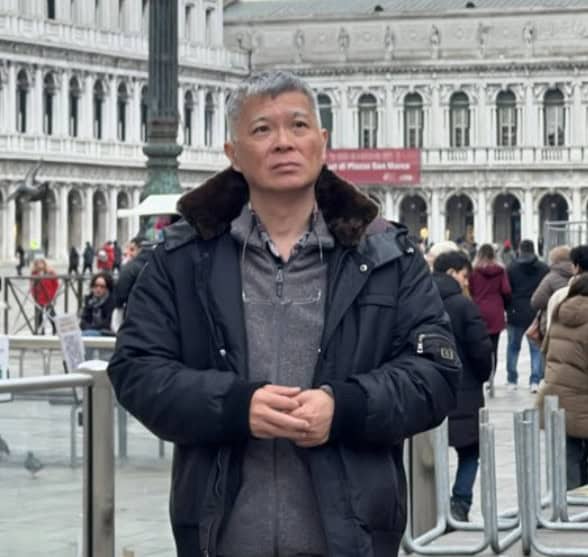
Michael Koh is a production specialist and entrepreneur who founded Spring Forest Studio in 2017 to provide event and virtual production solutions in Singapore. He specialises in hybrid live streaming, XR (Extended Reality) virtual production, and studio systems integration, transitioning the business from traditional videography to advanced corporate broadcasting. Operating out of a dedicated facility at NordCom2 in Singapore, he leads a technical crew to deliver multi-camera webcasts, digital sets, and technical consultations for large-scale corporate events.