
Live language translation for hybrid conferences in Asia-Pacific is no longer a secondary production add-on. For enterprise events that combine in-room delegates, remote speakers, and distributed audiences across multiple time zones, translation must be engineered as part of the core live streaming architecture. In practice, this means treating interpretation as a real-time media workflow with the same rigor applied to video switching, audio routing, encoding, and network resilience. The stakes are high in corporate summits, investor briefings, regional sales kickoffs, partner conferences, and government-adjacent forums where audience comprehension, message accuracy, and brand credibility depend on stable delivery.
Across Asia-Pacific, the technical complexity increases because of multilingual requirements, cross-border connectivity, venue diversity, and varying platform policies. A conference in Singapore may require English, Mandarin, Japanese, Korean, and Bahasa Indonesia channels, while also supporting remote presenters from Sydney, Tokyo, and Hong Kong. The production design must account for low-latency interpretation paths, secure transport between encoder and platform, and clear separation of program audio from interpreter feeds. For live streaming teams, the objective is not simply to add subtitles or a language track. The objective is to build a deterministic media pipeline that preserves timing, intelligibility, lip-sync, and operational control across physical and virtual environments.
From an engineering standpoint, live language translation for hybrid conferences sits at the intersection of broadcast production, networking, and collaboration platform integration. The workflow typically involves a multi-camera program feed, a clean host mix, an isolated interpreter console environment, return monitoring, and either platform-native language channels or a custom distribution stack using RTMP, RTMPS, SRT, or managed cloud ingest. Production decisions must also address whether the event uses on-site interpretation booths, remote simultaneous interpretation, or a hybrid interpretation model that combines both. Each model changes the signal flow, latency budget, redundancy strategy, and crew structure.
Production Architecture for Multilingual Hybrid Conferences
A robust multilingual hybrid event begins with a clearly defined signal hierarchy. The primary program feed should originate from a video switcher that can accept SDI and HDMI 2.1 inputs, manage frame synchronization, and output a stable master program in 1080p60 or 2160p30 depending on venue bandwidth and platform support. For enterprise conferences, 1080p60 remains widely used because it balances image quality, compute overhead, and transmission efficiency, while 4K/UHD is typically reserved for premium executive broadcasts, exhibition keynotes, or content repurposing workflows. The technical decision should always reflect end-to-end capacity, not only camera capability.
Program Audio, Interpreter Audio, and IFB Routing
The audio architecture must isolate the host program from translation channels. A clean program mix is routed to the stream encoder, while each interpreter output is distributed as a discrete language channel. This is commonly handled through a digital audio console with Dante or MADI backbone routing, allowing separate buses for program, presentation playback, microphones, and interpreter monitoring. If the venue uses remote simultaneous interpretation, the remote interpreters receive a low-latency program feed and interruptible foldback, or IFB, with controlled talkback and cueing. The integrity of that feed is critical, because speech intelligibility is directly tied to accurate source audio.
Audio signal management should target consistent speech levels with appropriate headroom, typically keeping operational peaks well below clipping and ensuring that speech stays intelligible across translation channels. Interpreter outputs should be monitored independently through broadcast-quality headphones and confidence speakers, with level metering on every path. Latency between source speech and translated output must remain stable, because fluctuating delay is more disruptive than a modest but consistent offset.
Multi-Camera Switching and ISO Recording
Hybrid conferences in Asia-Pacific often require a mix of stage-wide, speaker close-up, audience reaction, and slides integration. A production switcher with auxiliary outputs should be used to generate the main program, language-specific lower-third variants if needed, and ISO recordings of each input for post-event localization. ISO recording, or isolated source recording, is valuable for compliance archives, highlight edits, and delayed distribution in local markets. SMPTE, the Society of Motion Picture and Television Engineers, standards remain relevant in ensuring timecode discipline and structured media handling across the production chain.
When multilingual interpretation is involved, camera framing must also support readability for visually impaired or mobile viewers who may rely on translated speech while following on-screen cues. This is especially important when slides contain dense technical content or financial data. The switcher output should be paired with a production multiview that includes program, preview, interpreter status, confidence audio meters, and network health indicators.
Streaming Protocols, Encoding, and Language Channel Delivery
Transport design determines whether a multilingual event survives real-world network variability. RTMP, Real-Time Messaging Protocol, remains common for ingest into distribution platforms and older workflows, but it is not ideal as a primary contribution protocol over uncertain WAN conditions because it lacks modern resilience mechanisms. RTMPS improves transport security through TLS, and many enterprise deployments still use it for platform ingest. For mission-critical contribution between venue, remote interpreter hub, and cloud production environment, SRT, Secure Reliable Transport, is preferred because it provides packet loss recovery, encryption, and latency controls that are more suitable for unstable or congested paths.
Codec Selection and Bitrate Management
For live encoding, H.264, also known as AVC, remains the most interoperable codec for enterprise event platforms. H.265, or HEVC, offers better compression efficiency, which can be beneficial for 4K distribution or constrained networks, but it introduces broader compatibility considerations and higher decode complexity. Bitrate selection must be based on resolution, frame rate, motion content, and platform ingest limits. A 1080p60 program feed for corporate conferencing often operates in the mid-single-digit to low double-digit Mbps range, depending on encoder quality settings and motion complexity, while 720p or 1080p30 language channels may be provisioned differently to reduce load and improve stability.
Interpretation channels do not require separate full-motion production visuals in most cases. Instead, the language stream can carry the same program video with an alternate audio track, or the platform can present an audio selector tied to a single shared video feed. For enterprise deployments using Teams, Zoom, or Webex, the selected platform must support multilingual channel architecture, role permissions, and clear viewer-side language selection. If the platform does not natively support multiple live audio tracks, the production team may need a parallel distribution layer or a custom web player integrated with authentication and event registration controls.
Cloud Ingest Versus On-Premise Distribution
Cloud-based production is attractive for regional scalability, especially when participants join from multiple countries and language teams are distributed geographically. Cloud systems can centralize mixing, transcoding, and language channel packaging, which reduces on-site hardware footprint. However, cloud workflows depend on stable uplinks, predictable egress policies, and careful monitoring of ingest-to-playout latency. On-premise distribution gives the production team tighter control over routing, local failover, and direct access to hardware encoders, switchers, and audio processors. Many enterprise events in Asia-Pacific use a hybrid design, where the venue handles primary capture and switching, then hands off contribution streams to a cloud layer for language packaging and audience delivery.
The best architecture is determined by risk profile. If the event includes multiple regional offices, executive panels, and simultaneous sessions, a distributed cloud model can improve flexibility. If the event is a high-visibility leadership broadcast or a regulatory meeting, an on-site master control environment with local recording and redundant uplinks often provides stronger operational assurance.
Network Infrastructure, QoS, and Redundancy Planning
Network engineering is the difference between a stable multilingual conference and an event that fails under load. Dedicated VLANs, managed switches, and quality of service, QoS, policies should isolate production traffic from venue guest access, building management systems, and corporate office traffic. Video contribution, audio transport, comms, and monitoring should be segmented where possible. If NDI, Network Device Interface, is used inside the local production network, bandwidth planning must account for the specific flavor of NDI deployed. Full-bandwidth NDI is significantly more demanding than NDI|HX, which uses lower bitrates but adds compression and latency tradeoffs.
Latency Budget and End-to-End Timing
In interpretation workflows, latency is not a single number. It is the sum of microphone capture, console processing, encoding, transport, platform buffering, decoder delay, and display latency. A usable production design targets consistency first, then minimizes delay within the constraints of the platform and network. For remote interpretation, the translator must hear source speech quickly enough to render accurate simultaneous output. For attendees, the delay between source speech and translation should remain stable so that room experience and remote experience feel synchronized.
Time alignment matters even more when the event includes shared Q&A, live polling, or moderated audience interaction. If the translated language feed drifts too far from the program feed, audience comprehension drops. Production teams should validate lip-sync with live source material, not only with test tones. End-to-end monitoring should include actual encoders, real platform playback, and remote test devices on different networks, including mobile and corporate VPN environments commonly used in Asia-Pacific enterprises.
Redundant Paths and Failover Strategy
Enterprise-grade events require dual internet circuits with diverse carriers whenever possible. A bonded or switched failover design can protect against last-mile outages, while dual encoders and dual power supplies provide hardware resilience. For mission-critical conferences, the control room should maintain a backup switcher output, backup audio mix, and backup recording path. If the primary contribution path uses SRT to a cloud ingest point, the backup may use a separate RTMPS or direct platform ingest path. The objective is not to duplicate everything blindly, but to identify the highest-risk nodes and engineer practical continuity.
On-site power continuity should include uninterruptible power supplies for switches, routers, encoders, audio DSPs, and interpreter booths. If the venue supports generator backup, production crews should still test the transfer behavior of network hardware and any PoE-powered devices. A stable multilingual conference depends on more than internet bandwidth. It depends on disciplined infrastructure governance from mains power to media endpoints.
Interpreter Operations, Platform Integration, and Audience Experience
The operational side of translation is just as important as the signal chain. Interpreters need predictable cueing, clear channel assignment, and a monitoring environment that supports sustained accuracy. In a hybrid conference, interpreters may work on-site in ISO-compliant booths or remotely through managed interpretation platforms. In both cases, production must provide reference audio, speaker identity cues, slide previews, and moderator instructions. If the event has consecutive sessions, the changeover procedure must define who mutes which buses, when language channels go live, and how speaker transitions are confirmed.
Integration with Microsoft Teams, Zoom, and Webex
Many enterprise clients expect the translation layer to integrate with collaboration platforms already used internally. Microsoft Teams, Zoom, and Webex each have their own meeting, webinar, and language interpretation capabilities, but platform support should be validated against the exact event format. Some workflows allow interpreted audio channels within the platform, while others require external distribution and a managed access layer. The production team should verify whether speakers join through the same environment as attendees, whether interpreters can be assigned roles securely, and how recordings are handled for each language track.
For corporate IT directors, security controls are a major concern. Access should be governed by authenticated registration, waiting room controls where applicable, and restricted media privileges for interpreters and presenters. If the event handles confidential financial, legal, or product roadmap material, the platform and encoding stack must be aligned with enterprise security policies, including encrypted transport, controlled session access, and clearly defined recording retention rules.
Audience Device Diversity and Accessibility
Hybrid conferences in Asia-Pacific must serve desktop users, mobile users, and delegates on corporate networks with varying firewall policies. Language selection should be intuitive, and if the platform supports it, each language track should be labeled clearly with a consistent taxonomy across the registration system, event portal, and on-screen interface. Accessibility also matters. Captions, where available, should be synchronized with the correct language channel, and playback controls should not interfere with live session continuity. For events with large audiences, language choice should persist across session changes whenever the platform allows it, to avoid repeat configuration for attendees.
Implementation Guidelines for Enterprise Event Teams
A successful deployment starts with pre-production engineering, not event-day improvisation. The technical team should build a signal map that lists every source, destination, audio bus, encoder, platform endpoint, and backup route. All camera paths, graphics feeds, interpreter channels, and speaker returns must be documented. During rehearsals, test each language channel with native speakers who can assess intelligibility, delay, and cue accuracy. A generic sound check is not sufficient for translation workflows. The test must validate actual language delivery under live-style switching conditions.
Recommended Deployment Practices
- Use a dedicated program audio mix for the main feed, separate from interpreter buses and confidence returns.
- Deploy dual internet uplinks with carrier diversity for venues hosting high-value enterprise sessions.
- Prefer SRT for contribution transport when network stability and encryption are priorities.
- Use RTMPS or platform-native secure ingest where compatibility and platform support require it.
- Validate H.264 or H.265 settings against both bandwidth ceiling and playback compatibility requirements.
- Monitor interpreter output, video program, and remote platform playback simultaneously during live operation.
- Implement ISO recording for the program feed and, where required, individual language outputs.
- Run full rehearsal cycles with presenters, interpreters, moderators, and platform operators before the event goes live.
For Asia-Pacific events centered in Singapore, regional connectivity planning should account for cross-border latency to Australia, Japan, India, Southeast Asia, and Greater China, especially when interpreters or presenters are remote. Singapore often functions as a regional production hub because of its strong connectivity, mature venue infrastructure, and broad enterprise adoption of hybrid event technologies. Even so, the core principle remains universal. Technical excellence comes from disciplined architecture, not geography alone.
Live language translation for hybrid conferences requires a production strategy that unifies broadcast engineering, platform integration, and interpreter operations into one coherent system. When the audio routing is disciplined, the network is engineered for resilience, and the platform is selected for multilingual capability, enterprise events can deliver accurate communication across physical rooms and virtual seats without sacrificing quality or control. For corporate event planners, AV professionals, and production managers, the most reliable outcome is achieved by treating translation as a first-class live workflow, designed with the same precision as the video program itself.
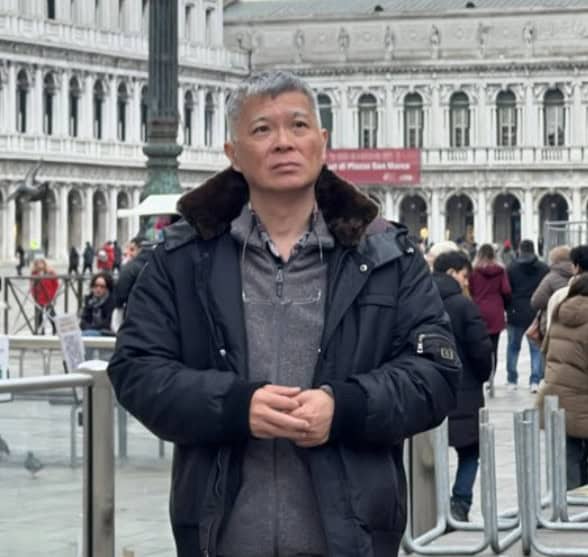
Michael Koh is a production specialist and entrepreneur who founded Spring Forest Studio in 2017 to provide event and virtual production solutions in Singapore. He specialises in hybrid live streaming, XR (Extended Reality) virtual production, and studio systems integration, transitioning the business from traditional videography to advanced corporate broadcasting. Operating out of a dedicated facility at NordCom2 in Singapore, he leads a technical crew to deliver multi-camera webcasts, digital sets, and technical consultations for large-scale corporate events.