
The Virtual Green Room: Preparing Speakers Before They Go Live
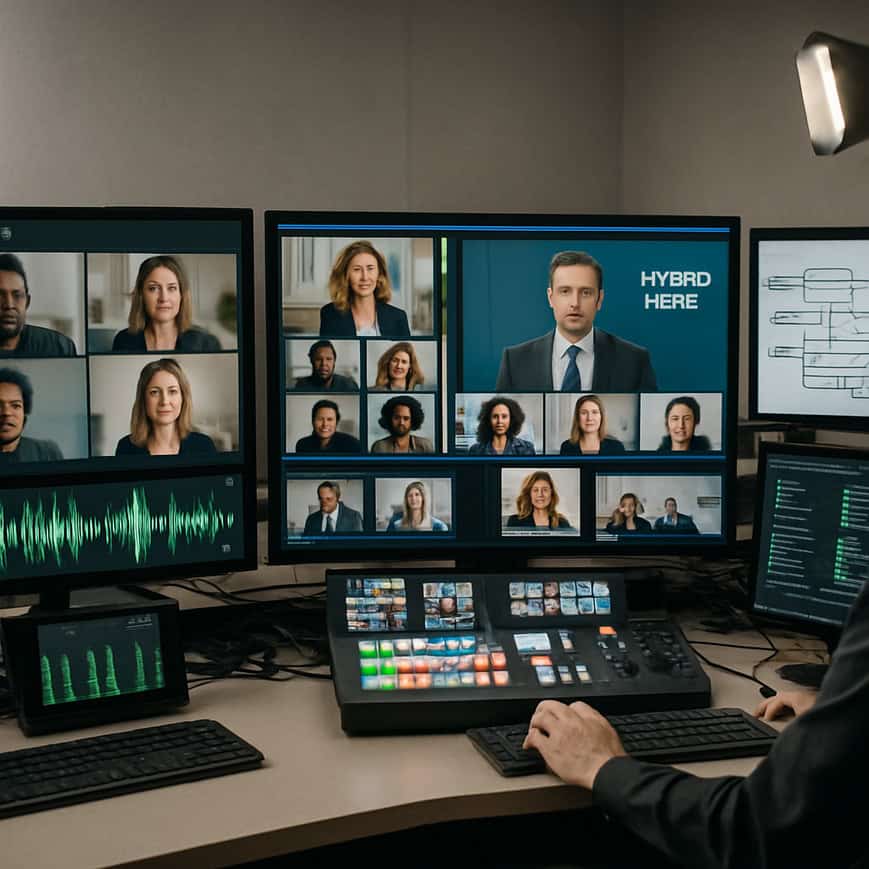
For enterprise live streaming and hybrid events, the virtual green room is not a courtesy call or a casual pre-show meeting. It is a controlled technical environment where speakers are prepared, validated, synchronized, and aligned with the production system before they appear on a live program feed. In corporate town halls, executive briefings, product launches, […]
Strategic Scheduling: Managing Multi-Time Zone Hybrid Events
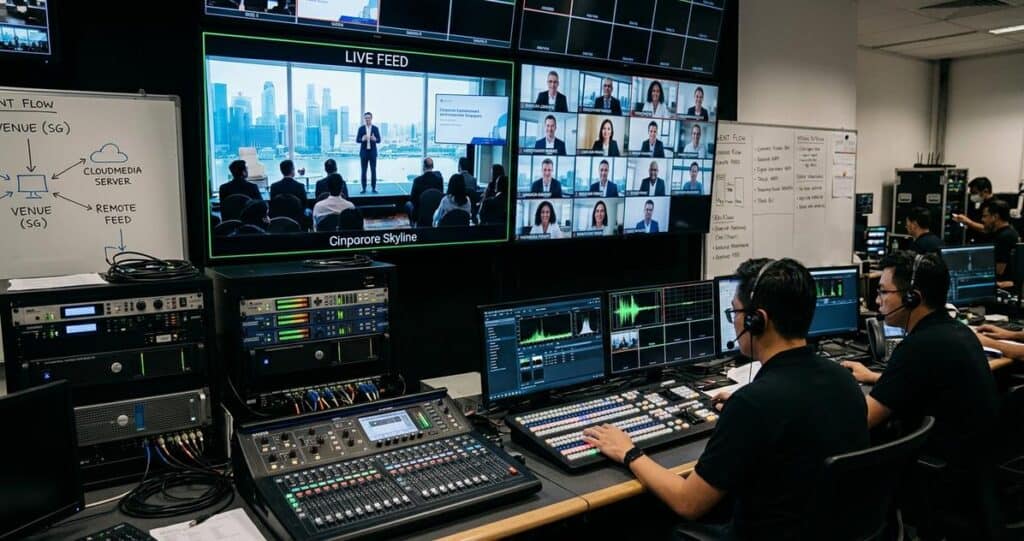
Multi-time zone hybrid events place exceptional pressure on production planning, network architecture, content operations, and audience experience design. For enterprise event teams, the scheduling problem is not simply a calendar exercise. It is a systems engineering challenge that affects transmission latency, crew availability, rehearsal windows, speaker onboarding, platform interoperability, redundancy planning, and the consistency of […]
Live Language Translation for Hybrid Conferences in Asia-Pacific
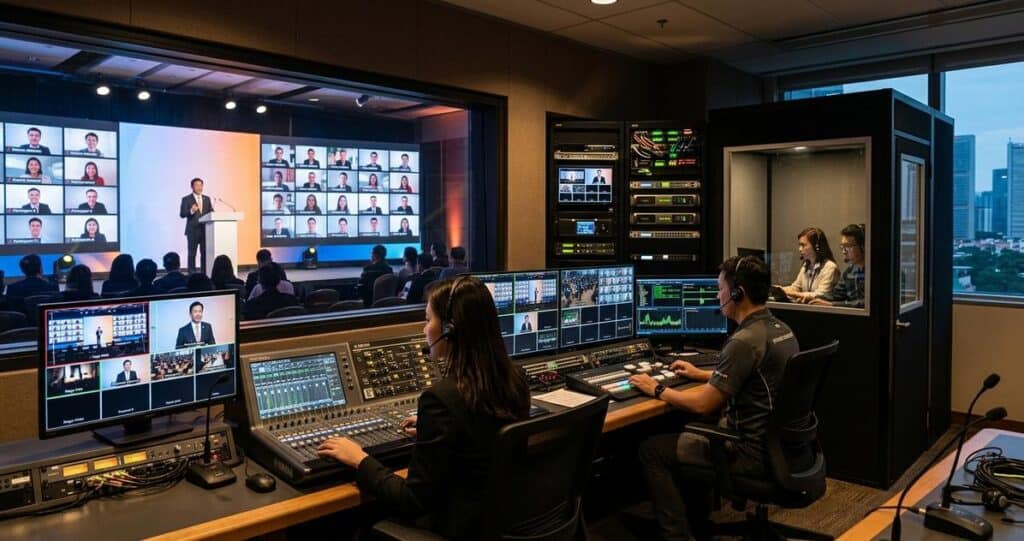
Live language translation for hybrid conferences in Asia-Pacific is no longer a secondary production add-on. For enterprise events that combine in-room delegates, remote speakers, and distributed audiences across multiple time zones, translation must be engineered as part of the core live streaming architecture. In practice, this means treating interpretation as a real-time media workflow with […]
High-Fidelity Textures: Why Visual Quality Dictates Brand Trust in XR

Extended reality, or XR, has moved far beyond novelty demonstrations and into the operational core of enterprise communication, product validation, training, and executive engagement. In corporate event environments, visual quality is not a cosmetic layer, it is a trust mechanism. When an XR experience is used to present a prototype, simulate a facility, train a […]
Reducing Travel, Increasing Impact: The Sustainability of XR Production
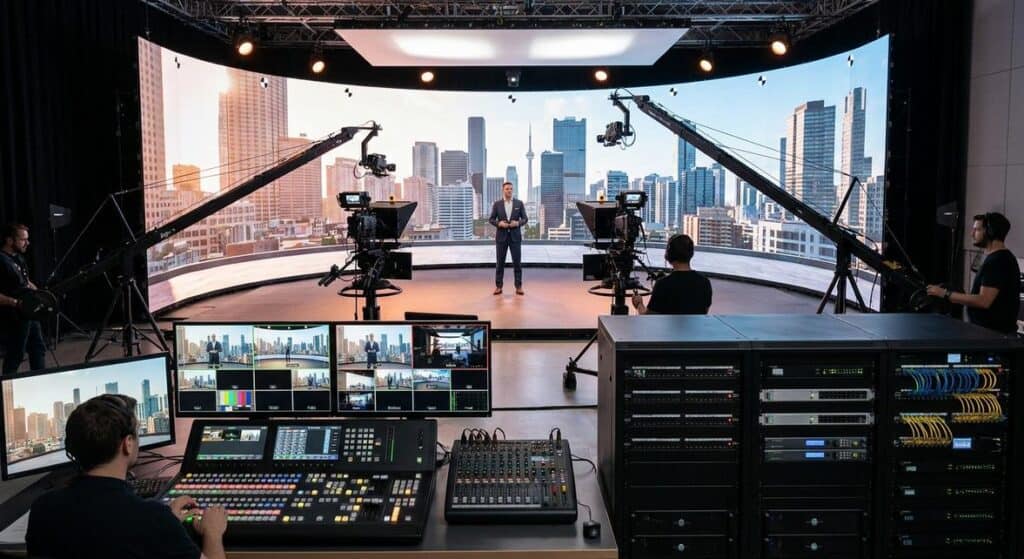
Extended Reality, or XR, has moved from a novelty layer in broadcast environments to a practical production model for enterprise events, product launches, executive town halls, investor presentations, and training programs. For corporate event planners and production teams, the sustainability case is no longer only about visual novelty. XR production can materially reduce travel, simplify […]