
Multi-time zone hybrid events place exceptional pressure on production planning, network architecture, content operations, and audience experience design. For enterprise event teams, the scheduling problem is not simply a calendar exercise. It is a systems engineering challenge that affects transmission latency, crew availability, rehearsal windows, speaker onboarding, platform interoperability, redundancy planning, and the consistency of the program feed across geographically distributed audiences. When a corporate summit includes delegates in Singapore, speakers in Europe, executive stakeholders in North America, and a live venue audience in Asia Pacific, every timing decision has technical consequences.
Strategic scheduling begins long before the first camera is switched or the first stream is encoded. It requires alignment between production control room operations, contribution feeds, encoder profiles, cloud distribution paths, and audience access constraints. In a hybrid environment, the physical room and the virtual room must be treated as two synchronized delivery surfaces. The event schedule must support both, while preserving broadcast-quality standards for picture, sound, and reliability. That means accounting for local venue load-in, signal shading, comms checks, encoder warm-up, platform authentication, speaker briefing, and contingency windows for packet loss, source swaps, or reconnection after upstream interruption.
For enterprise clients, the best scheduling model is built around operational reality. A global webcast does not succeed because the agenda looks elegant in a PDF. It succeeds because the timing structure supports engineering dependencies, reduces avoidable handoffs, and gives production teams enough time to validate every signal path from camera sensor to audience playback. In Singapore, where regional and global corporate events often involve APAC, EMEA, and North America stakeholders, scheduling must also respect venue access windows, hospitality timing, daylight differences for remote presenters, and regional network conditions. The result is a technical schedule that is as important as the show flow.
1. Building the Production Schedule Around Signal Flow and Operational Dependencies
A multi-time zone hybrid event schedule should be engineered from the signal chain outward. The first question is not when the keynote starts, but when each system component must be online to guarantee a clean program feed. That includes venue infrastructure, contribution encoders, cameras, switchers, audio consoles, return feeds, monitoring paths, and streaming endpoints.
Define the critical path for every source and destination
Every live production has dependencies that cannot be compressed beyond a practical limit. Multi-camera setups typically require camera shading, color matching, genlock verification, and tally confirmation. If the event uses SDI baseband transport, the routing matrix, converter chain, and embedded audio mapping must be verified before rehearsal. If the workflow includes NDI or NDI|HX sources, the network switch fabric, multicast policy, and bandwidth headroom must be checked well before showtime. If a remote speaker joins through Zoom, Teams, or Webex, the meeting bridge must be tested for echo cancellation, return audio, and delay alignment against the in-room program.
Scheduling should map these dependencies into fixed checkpoints. For example, a corporate town hall in Singapore may require the venue to be fully powered and networked several hours before doors open, with a separate technical rehearsal block for remote presenters in another time zone. The show caller, technical director, audio engineer, streaming engineer, and client stakeholders should all have a shared run-of-show that identifies hard locks, flex windows, and no-fail moments. Hard locks are points where the schedule cannot slip without affecting transmission quality or speaker availability. Flex windows are buffer periods reserved for input changes, graphics updates, or remote contributor delays.
Account for clock drift, latency, and distributed cueing
Hybrid events operate across different clocks and different network paths. Even when all teams use synchronized timecode, remote systems can introduce latency variation. SRT, which stands for Secure Reliable Transport, is widely used for contribution over unpredictable networks because it improves delivery resilience through packet recovery and congestion handling. However, SRT does not eliminate latency, it manages it. RTMP and RTMPS, which are still common for distribution and ingest in enterprise streaming environments, also introduce buffering behavior that must be considered when designing cue timing.
When scheduling a panel with in-room participants and remote executives joining from multiple continents, the production team must define the acceptable latency envelope between the live room and remote returns. That affects when the director calls camera cuts, when lower-thirds are triggered, and when Q&A transitions occur. If the event includes simultaneous translation or interpretation, the schedule must also allow for audio routing verification, interpreter channel checks, and lip-sync validation. In technical terms, time zone planning and latency planning are inseparable.
2. Designing Hybrid Event Timelines for Global Audience Experience
Strategic scheduling for multi-time zone events is also an audience design problem. The physical venue may be in one region, but audience attention is distributed globally. That means the show flow should prioritize moments of highest engagement, such as executive openings, product announcements, or policy statements, at times that balance regional live attendance with remote accessibility. For enterprise stakeholders, the schedule should preserve the integrity of the message while respecting working hours across time zones.
Segment the event into live, live-to-tape, and on-demand elements
Not every segment of a hybrid event needs identical timing constraints. High-stakes executive remarks, partner announcements, and interactive Q and A may be scheduled as live segments because audience participation and immediate response are important. Training modules, technical demos, compliance briefings, or case study walkthroughs may be pre-recorded or live-to-tape, then inserted into the live program feed. This reduces pressure on the network, allows for tighter editorial control, and gives remote viewers in distant time zones a more polished experience.
A practical enterprise schedule often uses a modular structure. The opening keynote is delivered live, followed by a pre-produced demo clip, then a live panel with remote executives, then an on-demand breakout library released after the broadcast. This approach protects the live portions from unnecessary overruns while making efficient use of engineering resources. It also helps with translation workflows, captioning, and post-event archiving.
Plan for regional repeat windows and asynchronous access
In global enterprise environments, a single live broadcast rarely satisfies all regions equally. A Singapore morning stream may suit APAC, but it can be late evening for Europe and overnight for the Americas. Strategic scheduling should therefore include repeat windows, replay availability, or segmented regional sessions. The technical team should ensure that the content management system, streaming platform, and enterprise identity controls support both live access and controlled replay access. If the event requires authentication through single sign-on, the replay window must preserve entitlement logic across multiple time zones.
For confidential corporate events, access controls matter as much as timing. Tokenized URLs, domain restrictions, and audience-specific registration flows should be validated before the event goes live. If the stream is distributed through an enterprise platform, the production team must confirm adaptive bitrate ladder behavior, player load times, and concurrent user expectations. Scheduling and access policy must be planned together, not separately.
3. Encoding, Network, and Redundancy Strategy for Time Zone Spanning Productions
Because multi-time zone events depend on distributed teams and distributed audiences, the underlying transport infrastructure must be engineered for resilience. The schedule should reflect the time required to test primary and backup paths, not just the nominal airtime of the program. Enterprise streaming cannot rely on a single encoder, a single uplink, or a single platform endpoint when the event carries executive, investor, or customer communications.
Match codec profiles and bandwidth to the production design
For corporate hybrid events, H.264 remains a common baseline for compatibility, while H.265 may be used in some workflows for improved efficiency when supported by the full delivery chain. The encoder profile should be selected based on output resolution, frame rate, motion complexity, and distribution target. A 1080p50 or 1080p60 program feed for a high-motion event will require a different bitrate strategy than a 720p contribution stream for a low-motion executive panel. The production schedule should include time for encoder profile validation, keyframe interval checks, and audio codec verification.
Bandwidth planning must also account for contribution and distribution separately. A venue may send a contribution feed at one bitrate to a cloud production hub and then distribute an adaptive stream at multiple ladder levels for end users. That means upstream capacity, local internet resilience, and platform ingest specifications all matter. For a significant enterprise event, symmetrical connectivity, dual ISP diversity, and dedicated QoS policies on the venue network are best practice. The schedule should include pre-event throughput testing, not just a quick connectivity check at call time.
Use redundant paths and verified failover windows
Redundancy should be scheduled as a live operational activity, not left as a theoretical feature. A resilient architecture might include dual encoders, dual power feeds, dual network paths, and backup playback sources. If the primary stream is distributed over RTMPS, the team may maintain an alternate SRT contribution path to a backup processing node or cloud region. If the venue uses an on-premise production switcher, a standby program output should be available for emergency cutover. The production timeline must allocate time for failover testing and path restoration before talent arrives on stage.
Professional workflows also benefit from ISO recording, which captures isolated camera feeds and the program output for post-event compliance, editing, and archive. ISO recording requires storage planning, media offload procedures, and naming conventions that are consistent across regions and crews. In a multi-time zone event, the content operations team must know when these files will be available, who has access, and how quickly they can be repurposed for replay or localized versions.
4. Coordinating Remote Talent, Local Crew, and Enterprise Collaboration Platforms
The hardest scheduling challenge in a hybrid event is not the main stage. It is the coordination of remote speakers, local crew, and enterprise collaboration platforms that all operate on different technical assumptions. Teams, Zoom, and Webex are not broadcast systems, but they are often part of the contribution layer for executive participation, panel discussions, and stakeholder Q and A. The production schedule must therefore include platform-specific onboarding, audio return tests, camera framing checks, and backup contact procedures.
Build a remote speaker onboarding block into the schedule
Remote speakers need more than a calendar invite. They need a structured technical rehearsal that verifies microphone quality, camera position, lighting, network stability, and their understanding of stage direction. In practice, this means assigning a speaker coordinator, providing headset or lavalier recommendations, and running a timing review that matches the event’s actual production cues. A remote speaker in Europe joining a Singapore-based event should have an onboarding slot that reflects both local time and venue readiness. The schedule should include a standby period in case the speaker’s local network degrades or their platform session needs to be rejoined.
For panels with mixed in-room and remote participants, audio discipline is critical. The audio team must manage gating, mix-minus returns, and talkback systems so remote speakers do not hear themselves with objectionable delay. The run-of-show should specify when remote microphones are open, when interpreters are active, and when any music or video playback suppresses open mics. These are not editorial details, they are transmission quality controls.
Integrate show calling, comms, and telemetry into one timing model
Enterprise hybrid events perform best when production, comms, and monitoring operate from a shared timing model. The show caller needs confidence that the stage manager, graphics operator, and streaming engineer are working from the same cue sheet. Intercom systems should be checked for clear program confidence, IFB, and talkback routing. Multiview monitoring should be arranged so the director can see camera sources, graphics return, program output, remote feeds, and stream health telemetry at the same time.
A technically mature schedule includes communications checkpoints. For example, there may be a lock at T minus 30 minutes for all remote contributor check-ins, another at T minus 10 for final audio confirmation, and a T minus 5 no-change period except for emergency interventions. These locks protect the stream from last-minute source churn, which is a common cause of avoidable failure in corporate productions.
5. Implementing a Reliable Scheduling Framework for Enterprise Events
The most effective hybrid event schedules are operational documents, not promotional timelines. They should tell every technician and stakeholder what must happen, by whom, by what time, and with what technical dependency. This is especially important for enterprise events in Singapore, where regional coordination often spans APAC business hours and global executive calendars. The schedule should be structured to support both live execution and contingency response.
Use pre-production milestones that reflect engineering reality
A practical framework includes venue access, rack build, cable verification, network test, encoder config, graphics ingest, camera rehearsal, speaker check-in, dry run, and final technical rehearsal. Each milestone should have an owner and a deadline. If the event uses a cloud-based switching workflow, the schedule must also include cloud session provisioning, credential distribution, and test recordings. If the event is on-premise, then switcher preset validation, router crosspoint verification, and media server checks become essential.
Professional teams also document rollback paths. If the primary remote contribution method fails, what is the fallback? If the branded graphics system loses sync, what is the backup playout source? If an ISP experiences packet loss, can the venue fail over to a secondary circuit without interrupting the audience? These answers must be embedded into the timeline and rehearsed before airtime.
Choose cloud or on-premise based on operational control, not trend
Cloud production platforms offer scalability, distributed access, and quick collaboration for geographically dispersed teams. On-premise systems offer tighter local control, direct hardware integration, and predictable latency in controlled environments. Many enterprise events use a hybrid model, with local capture and switching at the venue and cloud distribution or remote guest integration upstream. The scheduling implications differ. Cloud workflows require browser access testing, login validation, and platform latency checks. On-premise workflows require hardware patching, physical signal inspection, and local storage verification.
The right decision depends on the event’s risk profile, audience distribution, and technical staffing. A confidential investor webcast may favor on-premise switching with tightly controlled distribution. A multinational internal town hall may benefit from cloud collaboration and regional remote speaker access. In either case, the schedule must reflect the chosen architecture, not force the architecture to fit an unrealistic run of show.
Operationalize rehearsal as a technical requirement
Rehearsal is not optional for multi-time zone hybrid events. It is the only reliable way to test time zone coordination, cue timing, source handoffs, audio mix balance, and stream stability. The rehearsal schedule should mirror the live schedule closely enough to expose real issues, including speaker availability, network congestion, and room acoustics. If the production is in Singapore and participants are joining from London and New York, rehearsal timing should be arranged so all critical presenters can attend at least one full technical run-through.
The engineering team should record notes on frame rate conversion, aspect ratio compliance, audio level consistency, lip-sync, and platform playback delay. Any deviation from expected performance should be resolved before live day. A strong event schedule includes enough time for these corrections. That is the difference between a polished enterprise broadcast and a rushed hybrid meeting.
Strategic scheduling for multi-time zone hybrid events is ultimately about control. Control over timing, control over signal integrity, control over audience access, and control over failure modes. When the schedule is built around production dependencies, network reality, and enterprise collaboration requirements, the result is a stable, professional, and scalable live experience. For corporate teams planning high-stakes events in Singapore or across global regions, the best technical strategy is to treat the schedule as part of the broadcast architecture. That mindset improves reliability, reduces risk, and creates a better experience for every audience segment, wherever they are watching from.
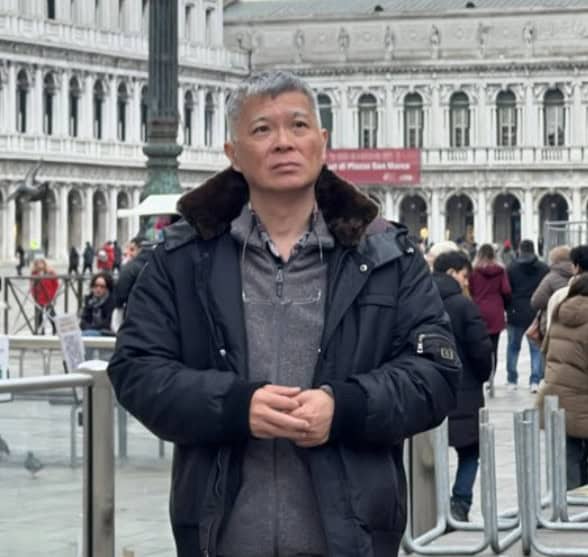
Michael Koh is a production specialist and entrepreneur who founded Spring Forest Studio in 2017 to provide event and virtual production solutions in Singapore. He specialises in hybrid live streaming, XR (Extended Reality) virtual production, and studio systems integration, transitioning the business from traditional videography to advanced corporate broadcasting. Operating out of a dedicated facility at NordCom2 in Singapore, he leads a technical crew to deliver multi-camera webcasts, digital sets, and technical consultations for large-scale corporate events.