
High-End Hardware for Remote Presenters: The Pro-Kit Difference
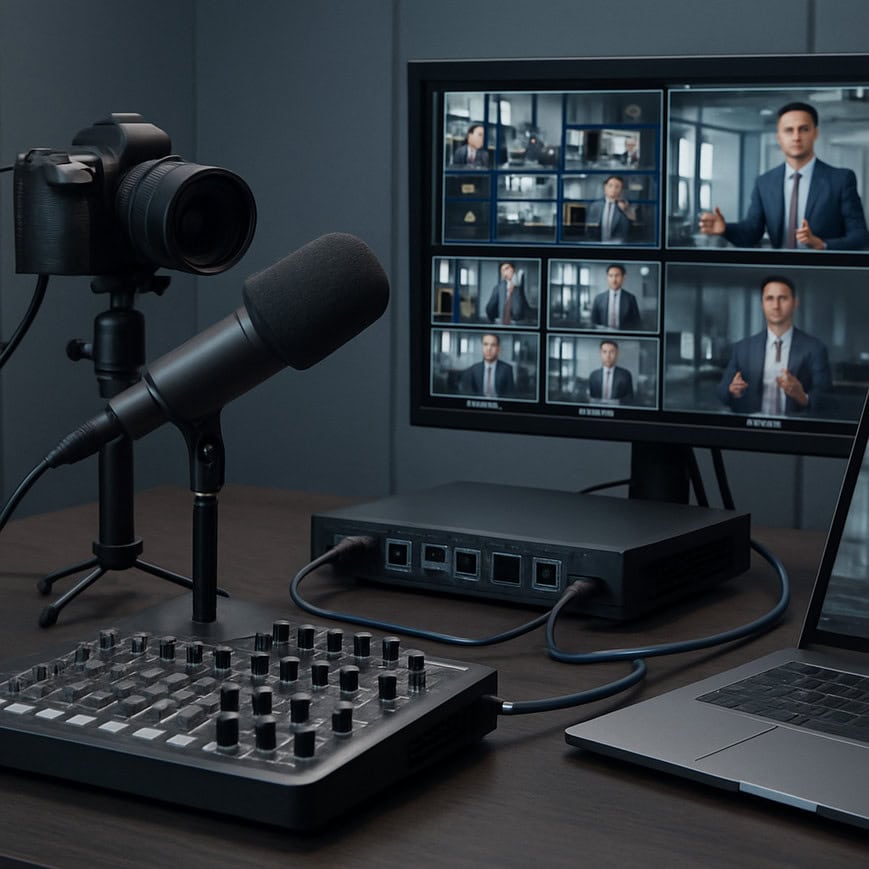
Remote presenters are no longer a contingency plan for corporate events. They are a standard production element in executive town halls, analyst briefings, product launches, earnings calls, training broadcasts, partner summits, and hybrid conferences that must deliver broadcast-level quality to both room and remote audiences. The technical challenge is not simply getting a laptop camera […]
Interactive Polling: Data Collection Strategies for B2B Marketers
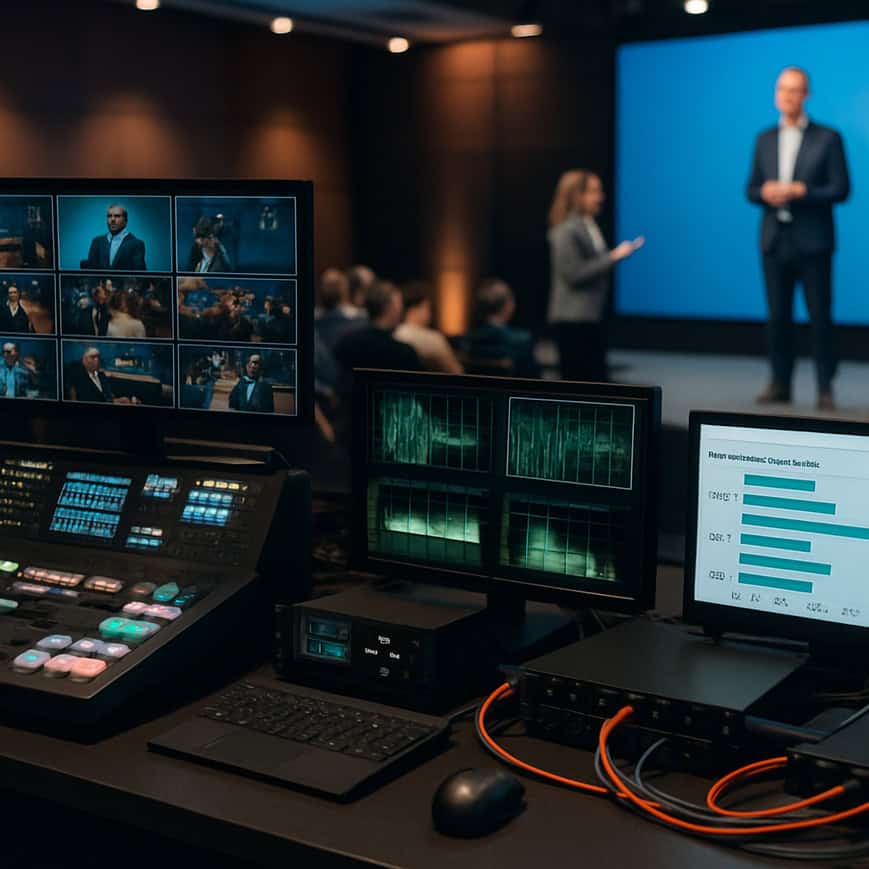
Interactive polling has become a high-value data collection mechanism for B2B marketers running live events, executive briefings, product launches, analyst sessions, and hybrid conferences. In a professional streaming environment, polling is not a decorative engagement feature. It is a telemetry layer that captures audience intent, qualification signals, buying-stage indicators, and operational feedback in real time. […]
Multi-Platform Streaming: Reaching Your Audience Wherever They Are
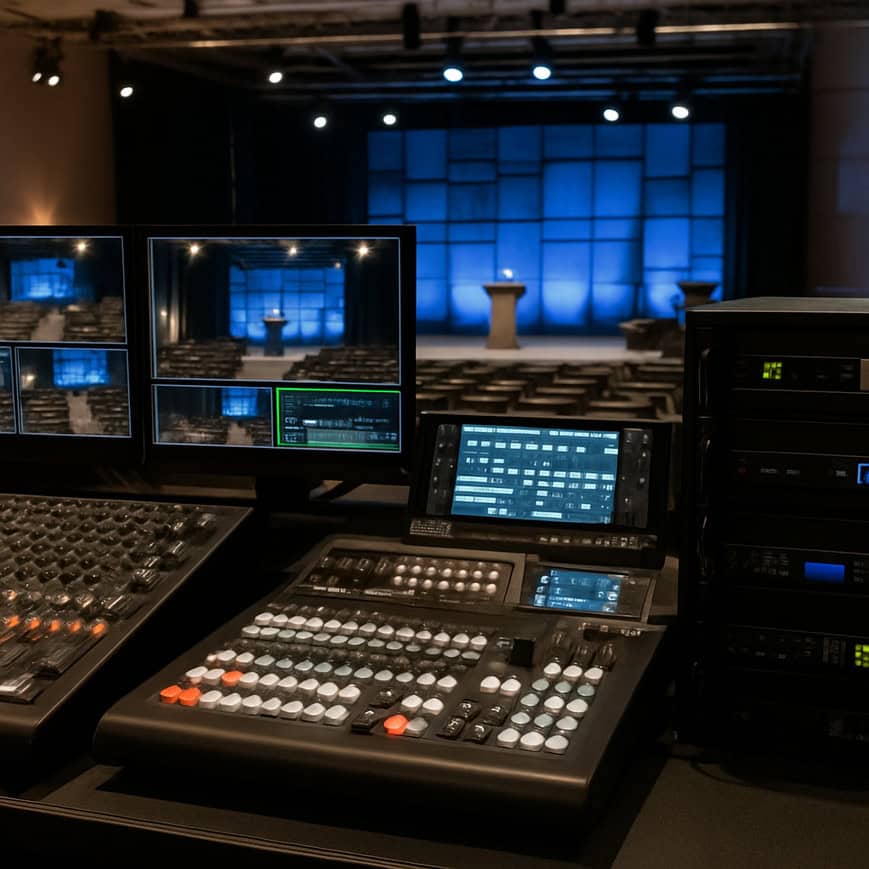
Why Multi-Platform Streaming Has Become a Core Requirement for Enterprise Events Multi-platform streaming is now a baseline capability for corporate town halls, product launches, internal communications, investor briefings, training programs, and hybrid conferences. Enterprise audiences no longer gather in a single room, on a single network, or in a single viewing environment. A board member […]
The Hybrid App: Connecting Your Streaming Platform to Mobile Users
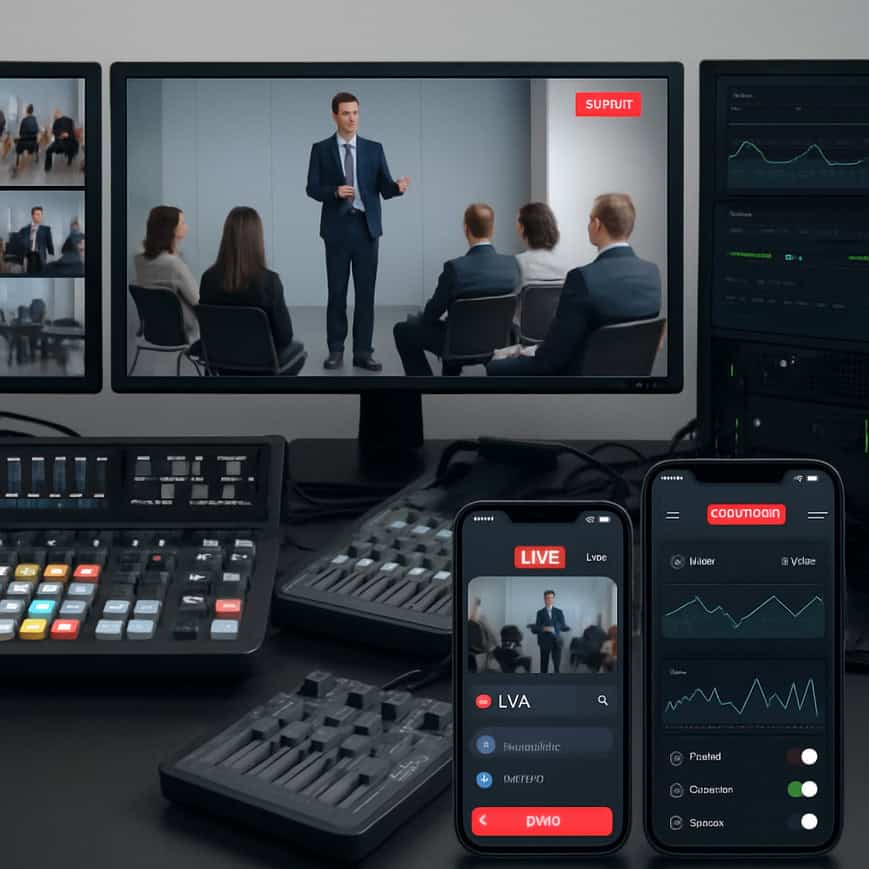
Why Mobile Connectivity Is Now Core to Hybrid Event Production For enterprise live events, the hybrid app is no longer a companion feature, it is a production layer that extends the streaming platform to every mobile endpoint in the room and beyond. In a corporate environment, mobile users are not passive viewers. They are attendees […]
Custom Landing Pages: Creating a Premium Entry Point for Your Stream
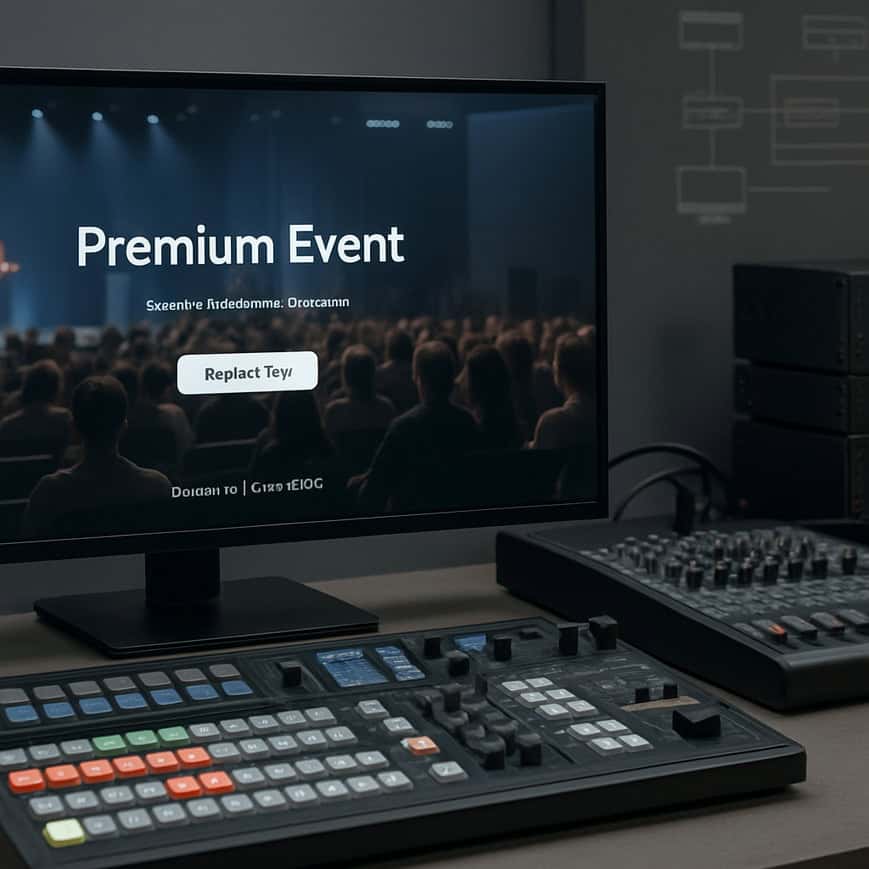
For enterprise live streaming, the landing page is not a decorative wrapper around a player. It is the first controlled touchpoint in the signal chain between your audience, your production workflow, and your data layer. In a corporate event, hybrid town hall, investor update, product launch, or executive broadcast, the landing page determines how quickly […]
The Hybrid Roadmap: Transitioning Your Annual Event to a Mixed Format
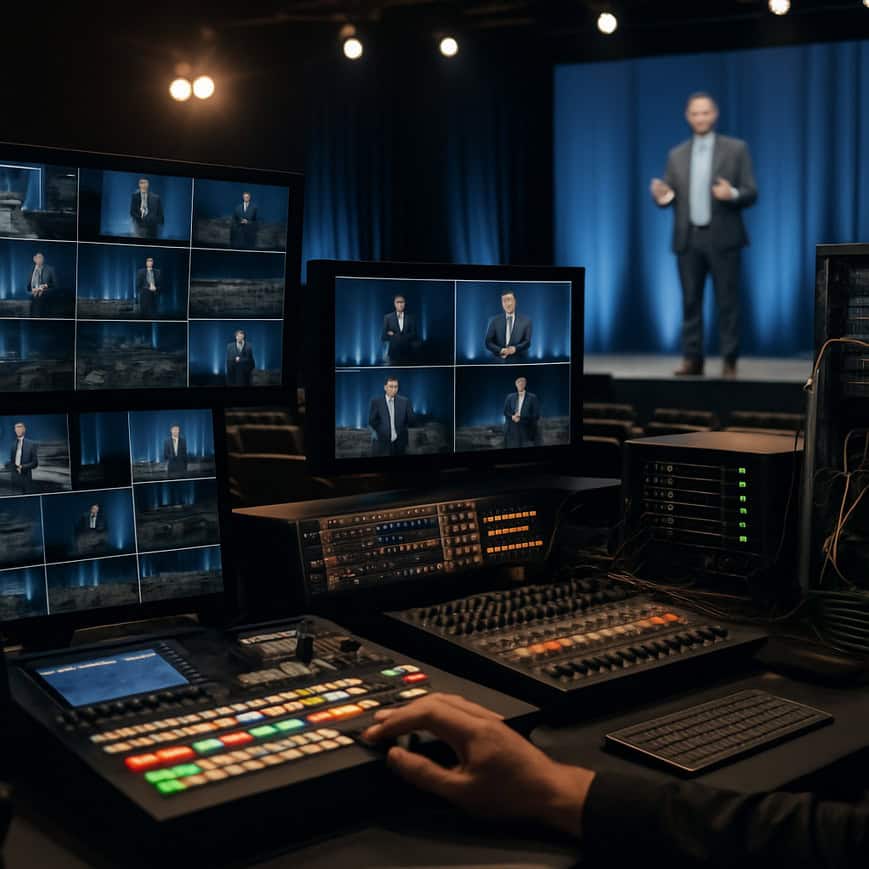
Annual corporate events are no longer defined by a single room, a single stage, or a single audience. For enterprise organizations, the modern annual meeting, sales kickoff, user conference, or partner summit increasingly operates as a mixed format production, where in room attendees and remote participants must receive the same level of technical clarity, content […]
The Hybrid Future: Why This Model is the Permanent Choice for B2B
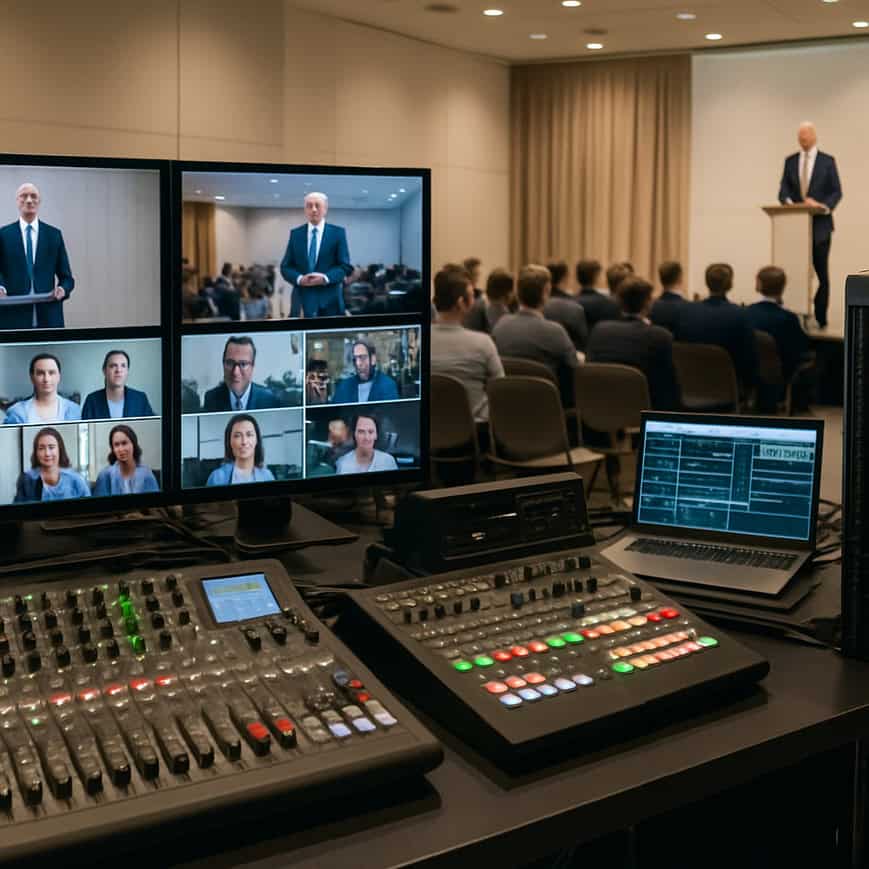
Hybrid event production has moved beyond contingency planning and become a permanent operating model for enterprise communication. For corporate event planners, AV teams, production managers, and IT directors, the question is no longer whether to support both in-room and remote audiences, but how to engineer a repeatable, scalable, and resilient workflow that serves both without […]
Managing VIP Expectations in a Hybrid Environment
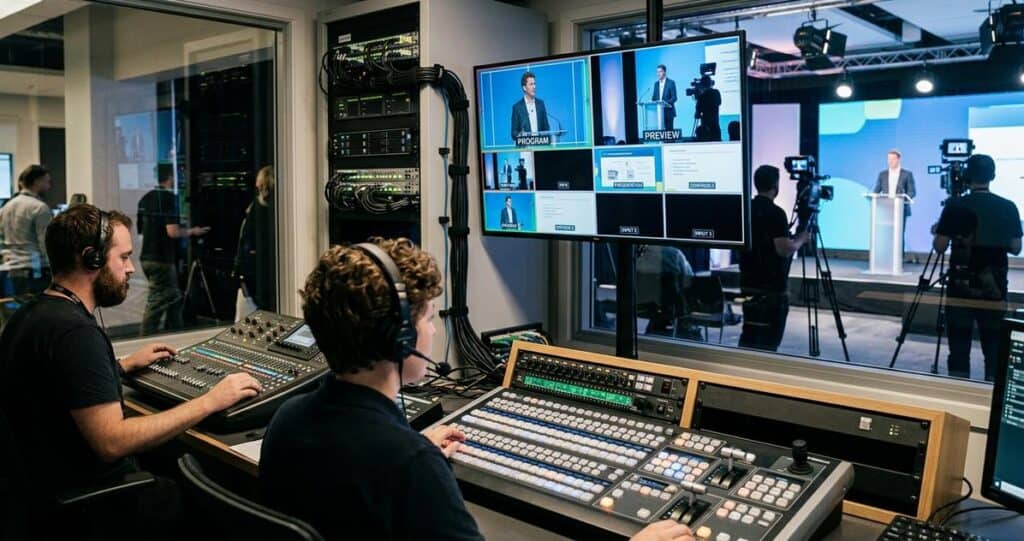
Managing VIP Expectations in a Hybrid Environment Managing VIP expectations in a hybrid environment requires more than polished stagecraft. For enterprise events, the real challenge is aligning executive, speaker, and stakeholder expectations with the actual capabilities and constraints of live streaming infrastructure, venue acoustics, network transport, production control, and platform interoperability. VIP attendees, whether seated […]
The Hybrid Advantage for HR: Conducting Regional Recruitment Drives
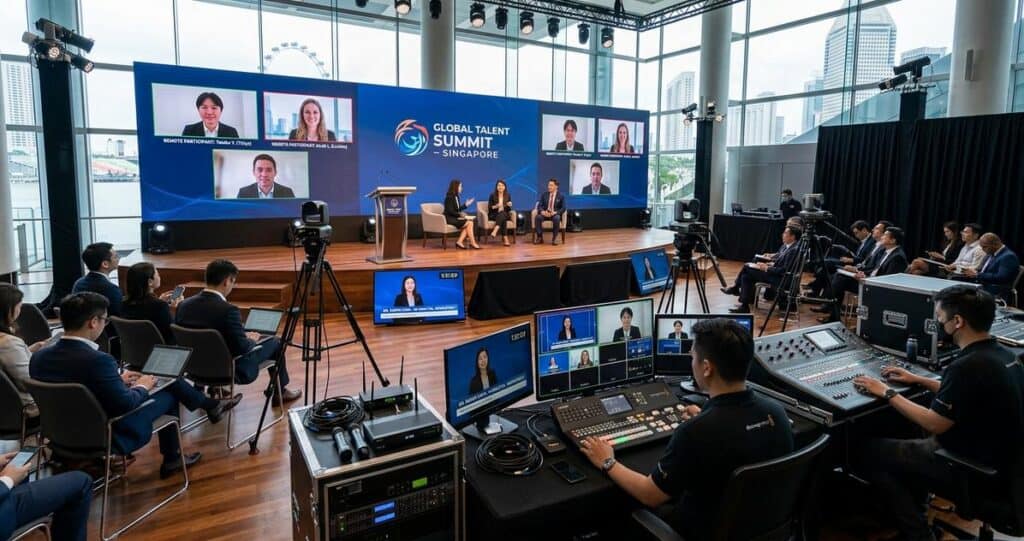
Regional recruitment has become a highly technical exercise for HR teams that operate across multiple cities, countries, and time zones. The shift toward hybrid event production has changed how organizations source talent, validate candidates, and standardize employer branding at scale. For enterprise HR teams, a regional recruitment drive is no longer just a hiring event […]
Strategic Scheduling: Managing Multi-Time Zone Hybrid Events
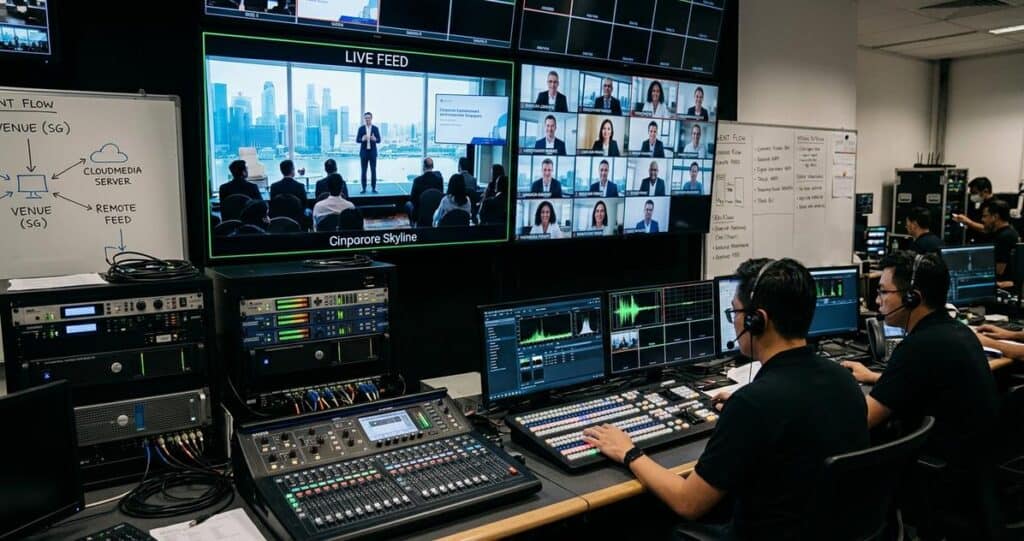
Multi-time zone hybrid events place exceptional pressure on production planning, network architecture, content operations, and audience experience design. For enterprise event teams, the scheduling problem is not simply a calendar exercise. It is a systems engineering challenge that affects transmission latency, crew availability, rehearsal windows, speaker onboarding, platform interoperability, redundancy planning, and the consistency of […]
Data-Driven Hybrid Events: Capturing Insights from Both Audiences
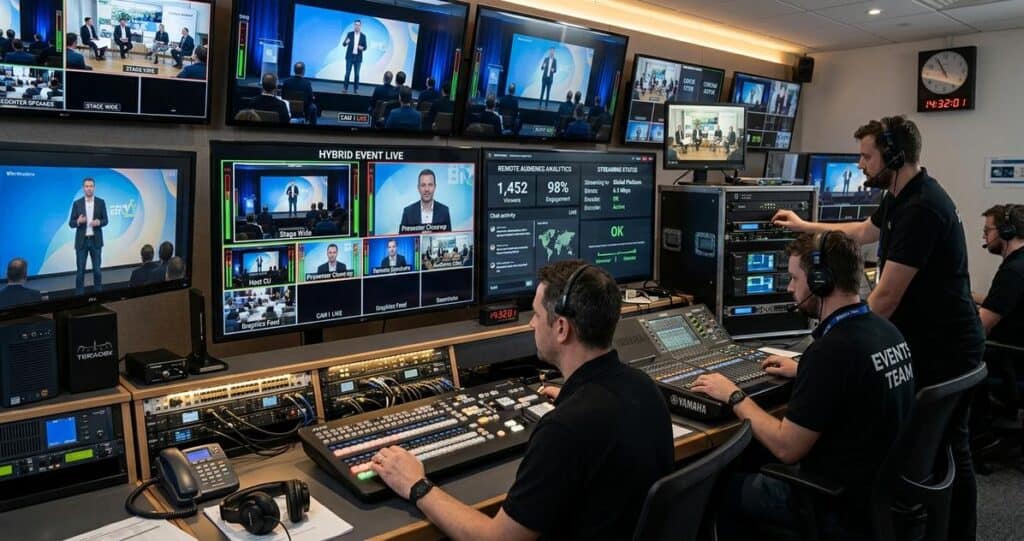
Hybrid events have moved far beyond a simple combination of a stage and a livestream. For corporate event planners, AV engineers, production managers, and enterprise IT stakeholders, the real value of a hybrid format is measurable intelligence. When a live event is engineered correctly, the physical room and the virtual audience become two synchronized data […]
Maximising Sponsorship ROI in Hybrid Event Formats
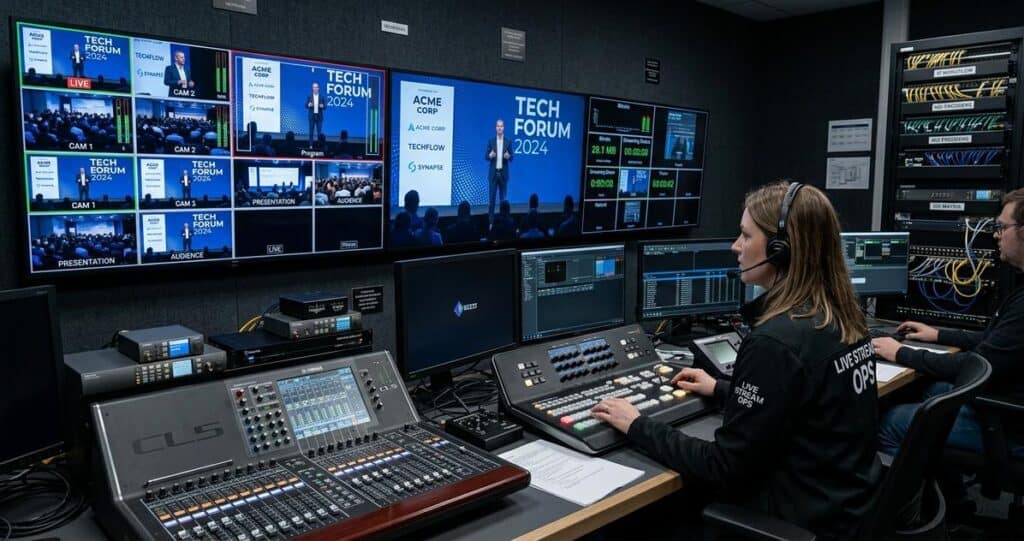
Hybrid event sponsorship has moved far beyond logo placement on a lower-third or a slide deck footer. For enterprise event planners, AV engineers, production managers, and IT directors, sponsorship ROI now depends on how effectively the event production stack converts physical and virtual attention into measurable engagement, qualified leads, brand recall, and post-event pipeline activity. […]
The Logistics of Hybrid: A Guide for Singaporean Event Planners
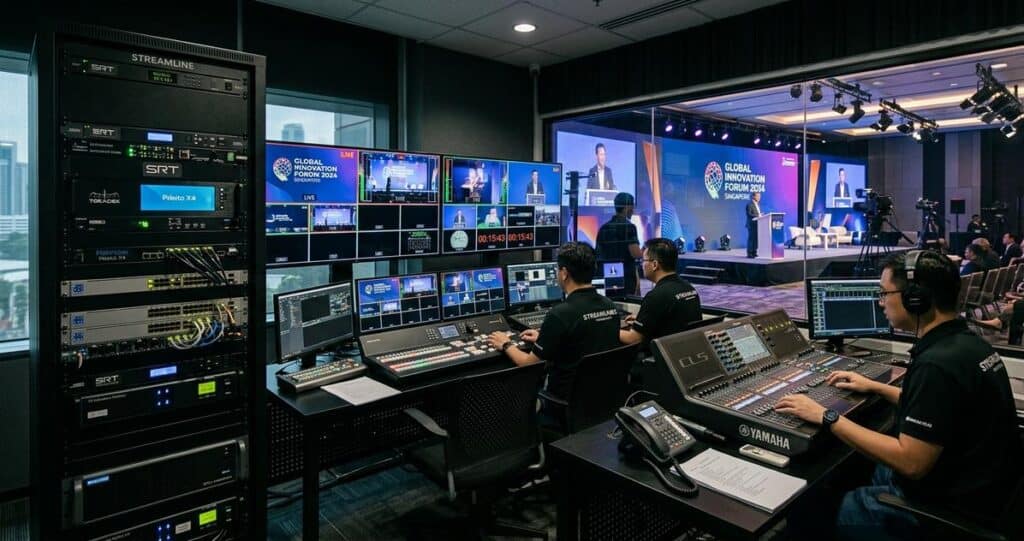
Hybrid events in Singapore demand more than a venue, a stage, and a livestream encoder. They require a coordinated production system that aligns audience experience, network engineering, signal transport, content governance, and venue logistics into a single operational workflow. For corporate meetings, town halls, product launches, annual general meetings, and regional leadership summits, the hybrid […]
3D Avatars vs. Live Presenters: Choosing the Right Strategy for Your Brand
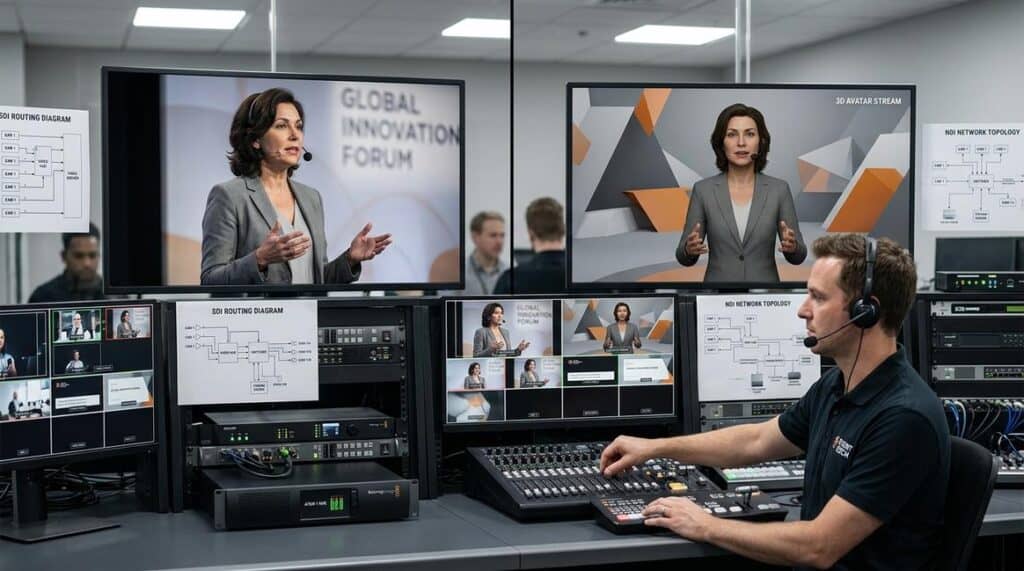
For enterprise live events, the choice between 3D avatars and live presenters is not a purely creative decision. It is a technical and operational decision that affects signal flow, audience trust, latency budgets, production cost, scalability, accessibility, and the overall resilience of the event architecture. In B2B event streaming, particularly for hybrid conferences, product launches, […]
The Aesthetic of Success: Why High-End XR Production Matters for ROI
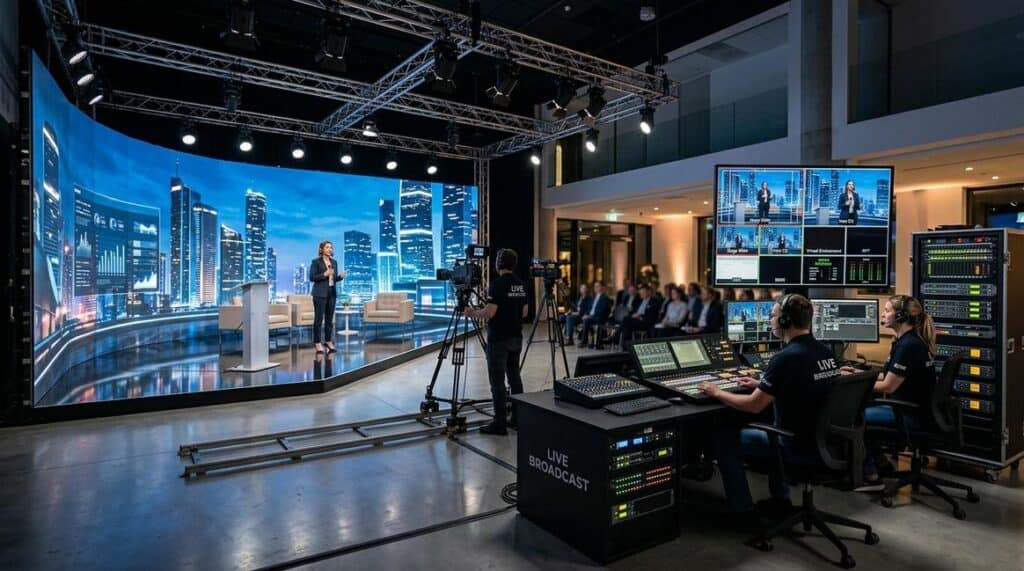
High-end extended reality, or XR, production has become a strategic differentiator for enterprise events because visual quality is no longer a cosmetic concern, it is a direct input into audience trust, message retention, sponsor value, and executive perception. In corporate environments, the production design of a keynote, product launch, investor update, annual town hall, or […]
High-Speed Rendering: The Backbone of Seamless 3D Live Streams
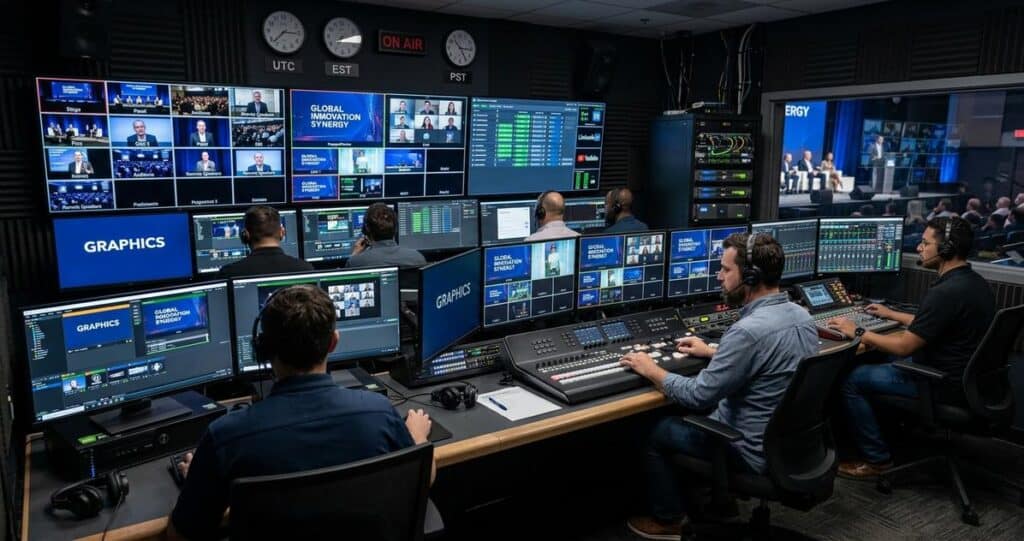
High-speed rendering is a core engineering requirement for professional 3D live streams in corporate events, hybrid conferences, product launches, virtual production stages, and executive communications. In a B2B event environment, rendered 3D content is rarely a standalone visual asset. It must be composited, switched, encoded, transported, monitored, and synchronized across physical venues and remote audiences […]
Designing the Impossible: Creative Freedom in 3D Virtual Environments
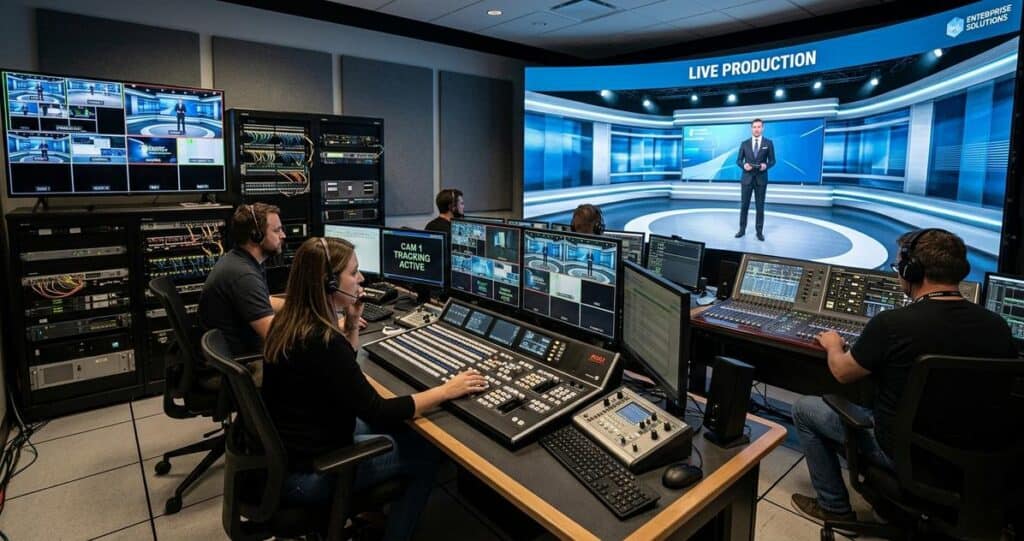
Three-dimensional virtual environments have become a practical production layer for enterprise events, product launches, executive town halls, investor presentations, training sessions, and hybrid conferences. For corporate event planners and AV teams, the value is not visual novelty alone. The real advantage is production control. A virtual stage removes many physical constraints, but it also introduces […]