
Annual corporate events are no longer defined by a single room, a single stage, or a single audience. For enterprise organizations, the modern annual meeting, sales kickoff, user conference, or partner summit increasingly operates as a mixed format production, where in room attendees and remote participants must receive the same level of technical clarity, content access, and engagement quality. The operational challenge is not simply streaming a keynote. It is building a resilient hybrid event architecture that integrates broadcast style production, enterprise network engineering, collaboration platform interoperability, and audience experience design into one coordinated workflow.
A successful transition from a traditional onsite event to a hybrid model begins with a roadmap, not with a camera purchase. Production teams need to define the signal path from acquisition to encoding, determine whether the event will ride on SDI, HDMI 2.1, NDI, or a hybrid of these formats, and establish how the program feed will be distributed to on premise screens, virtual platforms, and archival systems. For Singapore based corporate programs, where venue connectivity, regional latency, and venue access controls often shape the production design, the roadmap must also account for local bandwidth availability, redundant internet uplinks, and data governance requirements when collaboration tools such as Microsoft Teams, Zoom, or Webex are used as part of the experience layer.
Designing the Hybrid Event Architecture
The first technical decision in a mixed format event is the architecture of the production environment. A hybrid annual event typically includes a physical venue, an online delivery endpoint, and a production core that manages switching, audio mixing, encoding, and monitoring. This core may be deployed fully on site, partially in the cloud, or as a distributed system with selective processing at the venue and remote contribution through cloud based workflows.
Signal flow and source integration
At the acquisition layer, the production team must map every source to the correct transport method. Cameras may output SDI for long cable runs and professional routing, while laptop contributions and graphics systems may be introduced via HDMI 2.1 or converted into SDI for stability. NDI, including NDI|HX where appropriate, can reduce the need for heavy copper infrastructure in smaller control environments, but it must be deployed with disciplined network segmentation and switch configuration. For large annual meetings, especially those using multiple breakout rooms or distributed presentation zones, a hybrid of SDI baseband and IP based contribution is often the most reliable design.
Audio is equally critical. A hybrid event cannot tolerate poor intelligibility, phase issues, or inconsistent gain staging. Wireless microphones, boundary microphones, direct console feeds, and playback sources should be routed through a digital audio mixer with appropriate delay compensation and bus design. Program audio, clean feeds for interpretive or postproduction workflows, and isolated ISO recordings should all be planned at the same stage as the video path. If remote presenters are joining from Teams, Zoom, or Webex, their return audio must be managed through a dedicated mix minus workflow to prevent echo and acoustic feedback.
Venue infrastructure and control room design
A professional hybrid control room requires a clear separation between production, engineering, and content operations. The video switcher handles transitions, keying, playback, and multiview monitoring. A dedicated media server can drive lower thirds, motion graphics, or speaker support content. A routing layer, whether based on SDI matrices or IP video infrastructure, should allow the engineering team to reroute sources without dismantling the entire signal path. This becomes essential when a presenter laptop fails, a camera requires a backup angle, or a remote guest loses connectivity and needs to be replaced with a pre loaded holding slate.
For annual events with multiple content zones, the production control room should support synchronized timecode where ISO recording, graphics triggering, and playback assets need to align. SMPTE standards remain central in professional workflows, particularly when integrating timecode, picture formats, and color management across different devices. The goal is consistency from camera capture to encode output, ensuring the virtual audience receives a polished program feed rather than a stitched together approximation of the live room experience.
Choosing the Right Streaming and Contribution Protocols
Hybrid event streaming infrastructure depends on protocol selection, and the wrong choice creates avoidable latency, packet loss sensitivity, or platform incompatibility. No single transport protocol fits every part of the workflow. Enterprise teams should match the protocol to the function, not the other way around.
RTMP, RTMPS, and low complexity platform distribution
RTMP, or Real Time Messaging Protocol, remains widely used for contribution to enterprise streaming platforms and event delivery endpoints. RTMPS adds TLS encryption and is often preferred when security policy requires encrypted transport. RTMP and RTMPS are practical for many corporate event workflows because they are broadly supported by encoders and platforms, but they are not ideal as a primary contribution protocol over unreliable public networks when resilience is a concern. Latency is acceptable for many keynote programs, but production teams should understand that RTMP is not the same as a resilient contribution layer for mission critical remote sources.
SRT for secure and resilient contribution
SRT, or Secure Reliable Transport, has become a core protocol for hybrid production because it is designed to tolerate packet loss, jitter, and variable network conditions better than legacy transport methods. For remote speaker contribution, backhaul from a secondary venue, or transmission from a regional studio to the main event control room, SRT provides encryption, latency control, and packet recovery mechanisms that support enterprise grade reliability. Production engineers should configure bandwidth headroom conservatively and test real world network performance before show day. In enterprise environments, it is common to reserve dedicated contribution links for SRT sources and avoid mixing them with general office traffic.
NDI in managed IP production environments
NDI has expanded what is possible in hybrid production, especially for compact control rooms, overflow rooms, and digital signage integration. However, NDI must be treated as a managed production protocol, not as a casual plug and play solution. It performs best on segmented, properly switched networks with multicast awareness where needed, sufficient throughput, and strict quality monitoring. For high density annual conferences, NDI can simplify routing, but the engineering team should still retain baseband redundancy for critical camera sources and program output.
Where ultra low latency room interaction is required, such as remote presenter Q and A or executive panel moderation, the latency profile of each protocol becomes an operational decision. The objective is not the lowest latency in isolation, but the best balance between stability, quality, and platform compatibility. A high stakes annual event benefits more from a slightly higher but predictable latency than from a brittle low latency path that fails under load.
Multi Camera Production, Switching, and Program Creation
A mixed format annual event should feel like a broadcast production because the virtual audience is measuring the experience against professional standards. A single static camera, even at 4K UHD resolution, does not create the editorial cadence expected by enterprise stakeholders. The production design should include a minimum of the camera coverage necessary to support the program language, often a wide master, two close speaker angles, a roving or audience camera, and one or more source feeds for screens, demonstrations, or panel tables.
Camera workflow and image consistency
Color matching across multiple cameras is essential. Shutter, white balance, gamma, and color matrix settings should be locked and documented before rehearsals. If cameras are mixed from different manufacturers, matching via shader control or camera control units may be required to avoid visible shifts between shots. In corporate environments, especially where branded lighting and LED walls are used, poor camera matching becomes obvious immediately on the program feed and in ISO recordings.
Frame rate and resolution must be selected according to the entire production chain. Many corporate annual events operate effectively at 1080p60 for motion clarity and compatibility, while 4K UHD may be used for premium keynotes, content archives, or large venue displays. The production team must confirm that switchers, converters, encoders, and collaboration platforms can support the chosen format end to end. If content playback, live graphics, and remote guest feeds are not frame synchronized, artifacts and motion mismatch will occur in the mixed output.
Switching, graphics, and live control
The switcher is the editorial engine of the hybrid event. It should support fast cut, dissolve, picture in picture, source keying, and auxiliary bus management for separate display outputs. For annual events with active audience participation, a multiviewer is necessary so the technical director can monitor camera inputs, graphics returns, remote guest windows, program output, and confidence feeds simultaneously. Talkback systems should connect director, stage management, camera operators, and audio engineers so that cueing remains deterministic during live transitions.
Graphics systems should be integrated with the production rundown, not operated as a separate island. Speaker names, lower thirds, session timers, sponsor slates, and emergency holding graphics should all be ready for immediate triggering. ISO recording of individual camera feeds, program output, and key graphic layers allows for post event editing, compliance review, and highlight creation without re capturing the event.
Network, Encoding, and Redundancy Strategy
No hybrid annual event is stronger than its network design. Video may be the visible component, but the network determines whether the event reaches the audience without buffering, disconnects, or sync drift. Enterprise clients should treat network engineering as part of production design, not as an afterthought handed to building services on the day of the event.
Bandwidth planning and quality of service
For a typical live encoded program feed, uplink requirements depend on resolution, frame rate, codec, and target platform. H.264 remains the most broadly compatible codec for enterprise streaming, while H.265, also known as HEVC, can improve compression efficiency where platform support and encoder capability are available. The bitrate should be selected based on content type and motion complexity, with enough margin to prevent macroblocking in speaker closeups, slide transitions, and audience pans. Quality of service on the venue network should prioritize contribution traffic, control traffic, and collaboration traffic separately from guest Wi Fi and general office usage.
Dedicated hardwired connectivity is preferred for encoders, control surfaces, and remote contribution devices. When using cloud based production or remote production components, dual internet circuits with automatic failover are strongly recommended. A primary fiber path and a secondary diverse path reduce the risk of a single access provider issue taking the event offline. Where possible, bonded connectivity or routed failover should be tested in rehearsal so the production team knows exactly how the system behaves during a circuit loss.
Encoding architecture and delivery resilience
Enterprise streaming deployments often use dual encoders or encoder redundancy, particularly for keynote sessions with no second chance. One encoder can push the primary stream while a second encoder maintains a synchronized backup to a separate ingest endpoint. If the delivery platform supports it, parallel outputs can feed the main viewing channel, a lower bitrate backup, and a monitoring destination for technical staff. This design reduces the impact of a single encoder fault, a failed network interface, or a venue switch issue.
Latency tuning should be matched to the event format. A presentation heavy annual meeting may tolerate standard low latency delivery, while interactive panels or remote Q and A may require tighter end to end timing. The production team must also account for platform latency introduced by transcoding, CDN distribution, and player buffering. It is a mistake to assume that a locally measured encode delay represents the total audience experience.
Integrating Virtual and In Room Audiences
Hybrid events succeed when the virtual audience is treated as a first class audience, not as passive overflow. That requires a deliberate interaction design. Remote attendees should receive a clean, stable program feed, clear speaker framing, synchronized slides, and a means of participating in questions, polls, and chat moderation. The in room audience should experience the same content without delays, awkward cues, or visible technical improvisation.
Collaboration platform interoperability
For enterprise events, Microsoft Teams, Zoom, and Webex are often part of the delivery strategy, whether for remote speakers, executive meetings, or interactive breakout rooms. Each platform has its own limitations regarding frame rates, audio routing, virtual background behavior, and source sharing. Production teams should build a tested bridging workflow that adapts the live event feed to the collaboration platform rather than trying to force a meeting platform to function as a broadcast switcher. Where necessary, a dedicated machine can serve as a platform host while the main control room manages the production feed through external capture or NDI gateway conversion.
Remote presenters should be briefed on camera framing, lighting, microphone discipline, and network stability. A professional hybrid event cannot rely on consumer grade home setups without testing. The best practice is to conduct pre event technical checks, confirm upstream bandwidth, and capture contingency materials such as backup slide decks, pre recorded intros, and alternate speaker assets.
Audience experience consistency
The visual language should be consistent across venue displays and online playback. Confidence monitors, LED walls, and remote player windows should show the same branding, same speaker nomenclature, and same session structure. When the audience in the room sees a polished production but remote viewers encounter technical slippage, the event brand is weakened. Consistency depends on disciplined preproduction, rehearsal, and a documented show file that defines source order, backup paths, and operator responsibilities.
Operational Roadmap and Implementation Best Practices
Transitioning an annual event to a mixed format works best when the organization follows a phased roadmap. First, the event owner should define technical and business objectives, such as audience reach, executive visibility, lead generation, training outcomes, or partner engagement. Next, the production partner should conduct a venue assessment that covers rigging, power distribution, cable paths, RF conditions, network availability, and access restrictions. This assessment should result in a systems design document that specifies camera counts, switcher capacity, audio channels, playback sources, network topology, encoding strategy, and redundancy layers.
Rehearsals must include full signal path testing, not only presenter run throughs. Every camera, laptop, playback machine, remote guest feed, and backup route should be proven under live conditions. Audio should be checked in the room and in the stream. If the event includes interpreters, question moderation, or language specific tracks, those workflows need separate validation. Post event analysis should review stream health, switcher logs, audio recordings, platform analytics, and audience engagement metrics so the team can refine the workflow for the next annual cycle.
In Singapore and other enterprise hubs, venue density and event complexity often demand strong coordination between AV providers, IT departments, and corporate communications teams. The most reliable mixed format events are built by teams that share a common technical language and a clearly defined escalation path. Production success depends on preparation, redundancy, and disciplined execution. When the architecture is designed correctly, the annual event becomes more than a broadcast of the room. It becomes a scalable enterprise communication platform that serves every audience segment with professional quality and measurable reliability.
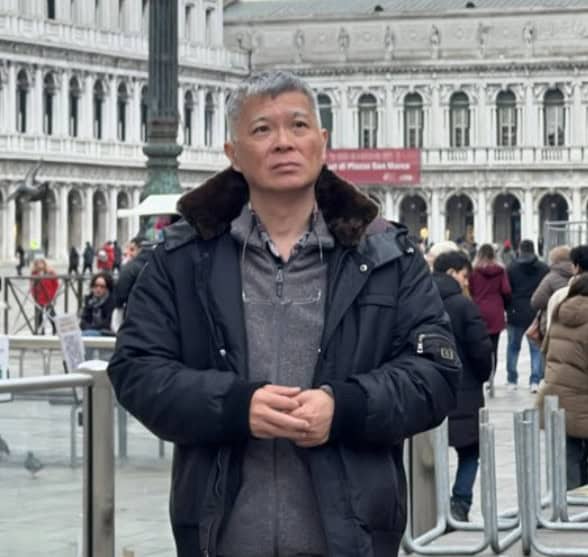
Michael Koh is a production specialist and entrepreneur who founded Spring Forest Studio in 2017 to provide event and virtual production solutions in Singapore. He specialises in hybrid live streaming, XR (Extended Reality) virtual production, and studio systems integration, transitioning the business from traditional videography to advanced corporate broadcasting. Operating out of a dedicated facility at NordCom2 in Singapore, he leads a technical crew to deliver multi-camera webcasts, digital sets, and technical consultations for large-scale corporate events.