
Regional recruitment has become a highly technical exercise for HR teams that operate across multiple cities, countries, and time zones. The shift toward hybrid event production has changed how organizations source talent, validate candidates, and standardize employer branding at scale. For enterprise HR teams, a regional recruitment drive is no longer just a hiring event in a conference room. It is a distributed production workflow that combines in-person candidate engagement, remote participation, live interpretation, secure content distribution, and measurable audience analytics. When implemented correctly, hybrid recruitment creates a wider qualified applicant pool, improves scheduling efficiency, and preserves a consistent candidate experience across every region.
From a live streaming and production engineering perspective, the challenge is not simply to “broadcast” a hiring session. The objective is to design a resilient, low-latency, professionally mixed communication environment that supports panel presentations, breakout interviews, Q and A sessions, and one-to-many employer messaging without introducing technical friction. That requires a production architecture that accounts for signal routing, encoding profiles, network assurance, redundancy, monitoring, and integration with enterprise collaboration platforms such as Microsoft Teams, Zoom, and Cisco Webex. For multinational employers, especially those running recruitment drives in hubs such as Singapore, Kuala Lumpur, Jakarta, Hong Kong, or regional satellite offices, hybrid design becomes a strategic capability rather than a convenience.
Hybrid Recruitment as a Production Workflow, Not a Simple Meeting
HR leaders often begin by defining the recruitment agenda, but the production team must define the signal path. A regional recruitment drive can include keynote welcome segments, job family presentations, technical assessments, leadership interviews, and virtual office walkthroughs. Each component has different requirements for camera composition, audio intelligibility, latency tolerance, and participant interaction. A single videoconferencing endpoint is rarely sufficient for these conditions. A proper hybrid deployment uses a live production control layer that separates contribution sources, switching, encoding, and delivery.
Segmenting the candidate journey
The candidate journey should be mapped to production modules. Registration data flows into the event management system, then into session routing for live streams and breakout rooms. On-site candidates may enter a physical venue with LED backdrops, confidence monitors, and staffed registration desks, while remote candidates join via browser-based or application-based access. For high-volume regional drives, this segmentation helps reduce congestion in interview pipelines and allows HR teams to maintain interview discipline. It also supports parallel scheduling, where one stream can host employer branding content while another handles role-specific assessments or recruiter drop-ins.
From a technical standpoint, every session should be categorized by whether it is public-facing, semi-private, or one-to-one. Public-facing sessions can be distributed through RTMP, which stands for Real-Time Messaging Protocol, to a managed platform or enterprise streaming endpoint. Sensitive interview segments should use authenticated meeting environments or protected transport such as SRT, Secure Reliable Transport, when contribution over the public internet is required. For internal candidate shortlisting and panel evaluation, the production workflow should integrate access control, session logging, and recording retention policies aligned with enterprise governance requirements.
Consistency across regions
Regional recruitment drives in multi-site organizations demand consistent visual and acoustic standards. Candidate trust is affected by camera framing, lighting quality, speaker audio clarity, and timing precision. A recruiter appearing in a brightly lit Singapore venue should not be visually disconnected from a panelist joining remotely from a corporate office in Manila or Bangkok. That consistency is achieved through standardized scene presets, color temperature matching, calibrated microphones, and a defined program output profile. In practice, a production operator may manage a 1080p60 program feed for live panel sessions, with a separate 4K UHD acquisition path for archive or downstream edit use, depending on venue bandwidth and endpoint capability.
Streaming Infrastructure for Enterprise Recruitment Events
Hybrid recruitment production depends on a stable infrastructure that can handle contribution ingest, switching, encoding, and distribution with minimal latency and predictable quality of service. Enterprise clients should design around the venue network first, then the content workflow. The most common failure points are not the cameras themselves, but poor upstream connectivity, unmanaged VLAN design, and insufficient audio routing discipline.
Contribution formats and protocol selection
In a controlled venue, baseband video may be carried over SDI, Serial Digital Interface, because it remains reliable for long-form live production and multiview monitoring. HDMI 2.1 is useful for specific workstation sources, laptop presentations, and some camera outputs, but it is not a substitute for a managed production backbone. For networked production, NDI, Network Device Interface, and NDI|HX can be used for camera contribution, confidence feeds, or auxiliary graphics, provided the switch infrastructure is engineered for multicast or unicast behavior, bandwidth, and clock stability.
For remote speakers, SRT is especially relevant because it is designed for packet loss resilience and encrypted contribution over unpredictable networks. It is commonly used for remote recruiter participation, executive introductions, and off-site subject matter experts. RTMP and RTMPS remain useful for platform delivery and certain ingest workflows, particularly where compatibility with a managed distribution service is required. However, for enterprise-grade contribution over public internet, SRT provides stronger operational control due to its retransmission behavior and latency tuning. If a recruitment drive includes live captions, translation, or asynchronous monitoring, the transport stack should be selected with these dependencies in mind.
Encoding, bitrate, and latency planning
Encoding policy should reflect the audience device mix. For most regional recruitment drives, 1080p at 25 or 30 frames per second is sufficient for live delivery, with a video bitrate often in the range of 4 to 8 Mbps for H.264, depending on motion complexity, graphics density, and platform constraints. H.265, also known as HEVC, can reduce bitrate requirements, but platform compatibility and decode support must be validated in advance. If the event includes slides, detailed technical demonstrations, or stage presentations with frequent cuts, encoding profiles should preserve text readability and avoid aggressive rate control that introduces macroblocking.
Latency management is critical for candidate interaction. A recruitment drive with Q and A or interview slots benefits from low glass-to-glass latency, but the acceptable range depends on the architecture. Contribution latency can be reduced with tuned SRT buffers, while delivery latency will vary based on the platform and player stack. For interactive sessions, the goal is not only low latency, but synchronized operator control, reliable speaker turnaround, and predictable audio return. In practice, the production team should separate the interactive session from the distributed stream where possible, so that panel participants use a direct conferencing path while the audience receives a stable program feed.
Audio signal flow and intelligibility
Audio quality determines whether a recruitment event feels professional or difficult to follow. The production mix should prioritize speech intelligibility over music or ambience. A typical corporate setup may include wireless handheld microphones for moderators, lavalier microphones for panelists, a direct interface for laptop playback, and a mix-minus return for remote participants. Gain structure should be calibrated so that speech remains within a controlled operating level, with headroom preserved to prevent clipping on energetic speakers. Audio routing should be handled through a digital mixing console or an audio interface tied to the production switcher, with separate program, auxiliary, and monitor buses.
For larger recruitment forums, talkback systems allow stage managers, camera operators, and remote producers to coordinate without interrupting the candidate-facing program. This is particularly important when panel interviews involve live handoff between recruiters, hiring managers, and technical assessors. If the event includes bilingual or multilingual audiences, separate audio channels or interpretation workflows should be planned in advance. Audio delay compensation may be required to maintain lip-sync across different contribution paths and encoding pipelines.
Multi-Camera Production and Switching for Recruitment Drives
A regional recruitment event benefits from the same production language used in professional corporate broadcasting. A single locked-off camera can satisfy a basic webinar, but a multi-camera setup significantly improves engagement, particularly when the objective is to present employer value, office culture, and leadership accessibility. A common configuration includes a wide master shot, a close shot of the moderator, a camera dedicated to the panel, and a roving camera for venue b-roll or candidate interaction coverage. In larger venues, PTZ, pan-tilt-zoom, cameras can be deployed for compact operation and remote control, although they should be paired with thoughtful framing and exposure control to avoid robotic visual output.
Switching, graphics, and lower thirds
Production switching should support clean cuts, picture-in-picture layouts, speaker full-screen modes, and branded overlays. A hardware or software switcher can manage incoming SDI, HDMI, and IP sources, but the switching operator must also consider timing for titles, session IDs, and speaker lower thirds. For recruitment sessions, graphics typically include role name, department, office location, and sometimes application instructions or QR codes. These graphics should be rendered at broadcast-safe resolutions and tested against both dark and light background conditions.
If the event spans multiple regional offices, a unified package of openers, stingers, and sponsor bumpers helps create brand consistency. However, overproduction can distract from candidate content. The correct technical balance is a clean, repeatable design system with minimal motion complexity, predictable transitions, and legible typography. A multi-view monitor should show program out, preview, individual camera feeds, remote guest return feeds, and audio meters so the technical director can maintain confidence in the live mix.
ISO recording and archive use
ISO recording, meaning isolated recording of each camera or source, is valuable for HR teams that may repurpose recruitment content into future onboarding, department-specific hiring campaigns, or internal employer branding assets. ISO capture also provides a safety net for post-event edits, because it allows the post-production team to correct camera selection, refine pacing, and create short-form recaps. When recording hybrid sessions, the engineer should ensure synchronized timecode or precise record start alignment so that source files can be conformed efficiently. Where possible, program recording and ISO recordings should be stored on separate media paths or redundant storage targets to mitigate data loss.
Network, Redundancy, and Governance Requirements
Hybrid recruitment drives are enterprise events, so they require enterprise-grade reliability. Network engineering is often the determining factor between a successful regional event and a disruptive one. Dedicated internet access, QoS, Quality of Service, segmentation, and redundant uplinks should be treated as baseline requirements rather than optional enhancements.
Venue network architecture
The event network should be isolated from general guest Wi-Fi and office traffic wherever possible. A production VLAN, a control VLAN, and a guest or attendee VLAN provide clearer traffic separation and help prioritize critical media flows. Managed switches should support sufficient backplane capacity, PoE, Power over Ethernet, for cameras and access points where used, and robust spanning tree design to avoid loops. If IP cameras or NDI sources are deployed, bandwidth planning must account for aggregate stream load, especially in 1080p or 4K workflows. Even modest production environments can saturate poorly designed networks when multiple sources, recording paths, and confidence feeds operate concurrently.
Where feasible, the primary internet path should be supplemented by a secondary ISP circuit or bonded connectivity solution. Failover should be tested under load, not assumed. For cloud contribution or remote panel participation, latency to the chosen platform region matters. In a Singapore-based recruitment event supporting nearby ASEAN markets, selecting a regionally appropriate cloud distribution point can reduce delay and improve participant experience. Enterprise teams should also validate DNS behavior, firewall rules, and content security policies so that candidates can access sessions without friction on corporate or managed devices.
Cloud-based versus on-premise deployment
Cloud-based production offers scalability, distributed collaboration, and easier remote access for stakeholders. It can be effective for rapid regional deployment, especially when recruiting teams are spread across several offices. However, cloud-only workflows introduce dependency on external service availability and internet stability. On-premise or venue-based production provides tighter control over signal flow, local monitoring, and hardware-level reliability. For many enterprise recruitment drives, a hybrid production architecture is the most resilient model, with local switching and audio mixing at the venue, and cloud-based distribution, collaboration, or archive storage layered on top.
The right choice depends on event scale, security posture, and interactivity requirements. If the hiring process involves confidential salary discussions, regulated industry content, or strict data residency policies, local processing with controlled outbound distribution may be preferred. If the event must support a large dispersed audience and rapid regional replication, cloud orchestration can reduce travel and setup complexity. In both cases, the production standard should include encrypted transport, access control, and defined recording retention policies.
Operational Best Practices for HR and Production Teams
Successful hybrid recruitment drives are built through pre-production discipline. The HR owner, production engineer, and IT stakeholder should collaborate on a run-of-show document, technical rehearsal plan, network validation checklist, and escalation matrix. Every speaker, recruiter, and moderator should have a defined role, audio path, and join procedure. Remote participants must be briefed on microphone discipline, camera framing, and lighting conditions before the live session. On-site participants should be scheduled with buffer time for check-in, audio checks, and room orientation.
Technical rehearsal and contingency planning
A full technical rehearsal should verify camera switching, remote guest joins, graphics playback, audio mix balance, screen shares, recording, and failover behavior. The rehearsal should also confirm how the event behaves if a remote speaker drops from the call, if an encoder restarts, or if the primary venue uplink fails. Operators should know how to move from the primary program feed to a backup feed, whether that backup is a secondary encoder, a bonded internet path, or a preloaded standby graphic with moderator instructions.
For regional recruitment drives in Singapore and other major business centers, technical rehearsal is also where compliance and accessibility requirements can be validated. Captions, interpretation channels, and recording permissions should be reviewed before live day. If a venue uses enterprise identity tools for access, single sign-on should be tested well in advance. This level of preparation reduces candidate friction and improves the organization’s professional reputation.
Measuring success beyond attendance
HR teams should evaluate hybrid recruitment performance using technical and business metrics. Technical indicators include average stream start time, percentage of successful joins, audio quality complaints, latency consistency, and recording completeness. Business indicators include qualified applicant volume, interview completion rate, conversion from session attendance to application submission, and recruiter satisfaction. The combination of these metrics reveals whether the production architecture supported the recruiting objective or merely delivered video.
When measured correctly, the hybrid model creates genuine operational leverage. Regional recruitment drives can be replicated across offices without rebuilding the entire event from scratch. Reusable production templates, standardized audio kits, managed streaming profiles, and platform integrations reduce lead time and improve consistency. For enterprise HR teams, that means more predictable hiring cycles, broader regional reach, and a more credible candidate experience.
The hybrid advantage is not about replacing the physical recruitment event. It is about extending it through engineered distribution, disciplined signal flow, and enterprise-grade reliability. When HR teams work with a production partner that understands RTMP, SRT, NDI, SDI, workflow redundancy, and platform integration, regional recruitment becomes scalable, measurable, and technically robust. That is the standard expected by modern enterprise candidates and the organizations competing for them.
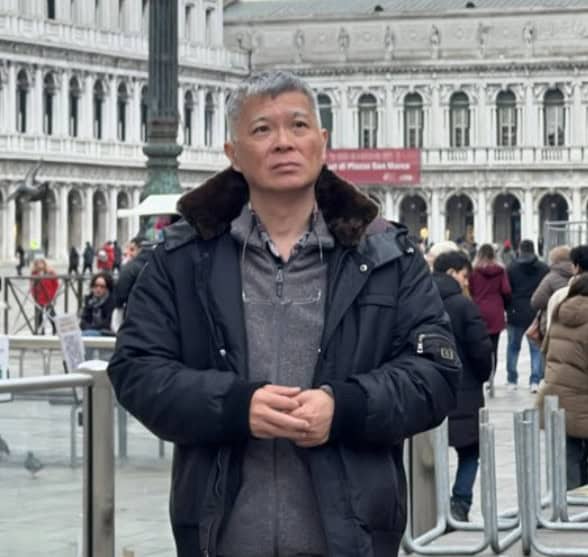
Michael Koh is a production specialist and entrepreneur who founded Spring Forest Studio in 2017 to provide event and virtual production solutions in Singapore. He specialises in hybrid live streaming, XR (Extended Reality) virtual production, and studio systems integration, transitioning the business from traditional videography to advanced corporate broadcasting. Operating out of a dedicated facility at NordCom2 in Singapore, he leads a technical crew to deliver multi-camera webcasts, digital sets, and technical consultations for large-scale corporate events.