
Hybrid events in Singapore demand more than a venue, a stage, and a livestream encoder. They require a coordinated production system that aligns audience experience, network engineering, signal transport, content governance, and venue logistics into a single operational workflow. For corporate meetings, town halls, product launches, annual general meetings, and regional leadership summits, the hybrid model introduces a dual-delivery challenge. The in-room audience expects broadcast-quality presentation and reliable show control, while remote participants expect low-latency, high-clarity audiovisual delivery with stable platform integration across Microsoft Teams, Zoom, Webex, or dedicated enterprise streaming portals.
In Singapore, these requirements intersect with tightly managed venue timelines, high-density business districts, venue access restrictions, enterprise security policies, and the realities of multi-stakeholder approval chains. The planner is no longer simply booking a ballroom. The planner is orchestrating a production environment that may include 4K/UHD cameras, SDI and HDMI 2.1 routing, Dante or AES67 audio transport, NDI or NDI|HX contribution, SRT, RTMP, RTMPS, network segmentation, bonded internet, ISO recording, and backup failover pathways. The logistics of hybrid are therefore not administrative alone, they are technical, operational, and architectural.
For Singaporean event planners working with corporate clients, the correct approach is to treat the hybrid event as a managed live broadcast with an in-room attendance component. That mindset drives every decision, from venue selection and load-in timing to bitrate management, signal redundancy, and platform monitoring. The objective is not simply to stream a meeting. The objective is to deliver a controlled, measurable, and recoverable live communications environment that meets enterprise expectations for quality of service, security, and continuity.
Hybrid Event Logistics Begin with Venue and Infrastructure Assessment
Hybrid production success starts long before the first camera is powered on. A venue must be assessed as a technical environment, not only a hospitality space. In Singapore, corporate events are often hosted in hotels, convention centers, serviced office auditoriums, or purpose-built event facilities. Each has different constraints in rigging, network access, acoustic treatment, power availability, and loading procedures. A production team should confirm ceiling load limits, cable access routes, equipment staging areas, audience sightlines, and truck dock or service lift access as early as possible.
Power distribution and electrical stability
A professional hybrid setup requires clean, protected power distribution. The production team should map separate circuits for lighting, display systems, camera control, audio processing, encoder racks, and networking gear where possible. Use uninterruptible power supply units for core systems such as switchers, encoders, routers, and network switches. For larger events, a power load calculation should account for LED walls, confidence monitors, graphics servers, and tally systems. Voltage stability matters because even brief interruptions can disrupt switching, corrupt recordings, or cause platform disconnects.
In practice, a Singapore corporate event with multiple PTZ cameras, a hardware vision mixer, audio console, graphics playback system, and dual encoders can create a meaningful electrical load. Engineering the event means assigning priority to systems that must remain online during a fault. Program output, audio mix-minus, and encoder paths are higher priority than noncritical presentation peripherals. The venue’s own power redundancy and generator policy should be confirmed in writing during technical planning.
Network readiness and WAN coordination
Network planning is one of the most important logistics tasks for hybrid events. Enterprise streaming depends on reliable upstream bandwidth, predictable latency, and acceptable packet loss. A single remote audience session using 1080p at 30 frames per second may function adequately with several Mbps of stable upload capacity, but corporate hybrid production often needs more than one outbound feed. There may be a platform program stream, a backup stream, an ISO recording upload, a remote speaker return feed, and cloud-based metadata or chat integrations. The network should therefore be sized conservatively, with headroom above the calculated bitrate.
Where venue internet cannot be trusted for mission-critical transmission, production teams should deploy bonded cellular backup, a dedicated leased line, or a second independent uplink. A separate VLAN for production gear helps prevent conflicts with venue guest Wi-Fi and corporate tenant networks. For SRT, RTMP, or RTMPS contribution, firewall rules and destination endpoints should be approved in advance. In enterprise environments, some clients require IP whitelisting, VPN access, or strict content security policies for all outgoing traffic. These requirements must be resolved during pre-production, not on event day.
Designing the Signal Flow for a Hybrid Production Workflow
The core of hybrid logistics is signal flow. Every camera, presentation source, microphone, playback device, and remote contributor must enter a controlled routing architecture that allows switching, monitoring, recording, and transmission without ambiguity. A clear signal map prevents operational confusion and reduces failure points. The planner should work with the production engineer to define source types, transport media, destination needs, and backup paths.
Camera systems, switching, and format discipline
Multi-camera corporate events typically use broadcast camcorders, PTZ cameras, or a mix of both, depending on stage design and operator access. SDI remains a highly reliable transport standard for long cable runs and locked timing, while HDMI 2.1 can be appropriate for shorter source-to-switcher paths or presentation feeds. In more advanced environments, NDI and NDI|HX provide flexible IP transport for contribution and routing, particularly where rapid reconfiguration is needed. However, IP video introduces network design complexity, so switch capacity, multicast behavior, and latency must be understood before deployment.
For consistent output, all sources should be standardized to the same resolution and frame rate whenever possible. Common corporate configurations include 1080p at 25 or 30 frames per second, or 2160p where the venue, switcher, and destination support UHD workflows. Mixing source standards without proper conversion introduces sync issues and unnecessary processing delay. A hardware scaler or frame synchronizer can stabilize presentation laptops, remote returns, and legacy sources that do not match the production format.
A live switcher should support program output, auxiliary sends, multiview monitoring, and downstream keying if branded graphics or lower-thirds are required. Larger events benefit from an operator configuration that separates technical direction, camera operation, and audio engineering. This reduces the risk of a single operator handling too many responsibilities during a high-pressure live show.
Audio routing, mix-minus, and intelligibility
Hybrid event audio quality has a direct impact on perceived professionalism. Clear video without intelligible sound still fails the enterprise communication objective. The audio chain should include properly placed lectern microphones, wireless handhelds or lavaliers, audience mics if interaction is expected, and dedicated feeds from playback or remote contributors. Audio mixing should be handled through a digital console capable of scene recall, dynamics processing, EQ, and routing flexibility.
For remote presenters, mix-minus is essential. The remote participant must hear the program feed without hearing their own return with delay. This requires careful routing, especially when integrating Zoom, Teams, or Webex sources into the live mix. In enterprise hybrid setups, Dante or AES67 audio networking can simplify distribution across consoles, stage boxes, and processors, but the network must be engineered for low jitter and stable clocking. Word clock or network clock alignment should be validated before the event begins.
Audio level discipline is just as critical as routing. Corporate content should stay within controlled loudness levels appropriate for speech-first delivery, and the production team should monitor gain staging from microphone input to encoder output. Clipped input at source cannot be repaired later in the chain. A proper line check, mic check, and monitor check sequence remains mandatory, even in fast-turnaround events.
Encoding, Protocol Selection, and Platform Integration
Once the internal production chain is stable, the next decision is contribution protocol and destination strategy. Hybrid events often require delivery to an enterprise meeting platform, a private CDN, or a secure event portal. The choice of protocol affects latency, reliability, firewall traversal, and operational complexity.
RTMP, RTMPS, and SRT in enterprise workflows
RTMP, the Real-Time Messaging Protocol, remains common for platform ingestion and is still widely supported in enterprise streaming workflows. RTMPS adds encryption over TLS, which is often required by security-conscious organizations. However, RTMP was not designed for modern unreliable networks, and it can be less resilient under packet loss than newer transport methods. For contribution over unpredictable internet paths, SRT, Secure Reliable Transport, is often preferred because it is designed for error recovery, encryption, and lower sensitivity to jitter. SRT is well suited to backhaul from venue to control room or from a remote production kit into a central production facility.
For Singaporean corporate events, SRT is particularly relevant when production teams want to centralize technical direction in one facility while maintaining a local venue presence. A remote production model can reduce on-site gear volume, but it requires disciplined network planning, proper latency compensation, and tested failover. If the stream destination is Teams, Zoom, or Webex, the workflow typically involves an ingest point or virtual camera bridge. Because each platform has different meeting behavior, audio processing expectations, and participant limits, the technical director should confirm supported resolutions, bitrates, and any restrictions on frame rate or aspect ratio before the event.
Encoding settings and bitrate governance
Encoding decisions should reflect content type and audience path. Speech-led corporate events often perform well with H.264 encoding for maximum platform compatibility, while H.265 may be used in certain controlled distribution contexts where bandwidth efficiency is prioritized and the destination supports it. The encoder should allow control over resolution, constant or variable bitrate mode, keyframe interval, profile selection, and audio codec parameters. For live delivery, bitrate should be matched to the available uplink with enough safety margin to avoid congestion, especially when other venue traffic shares the circuit.
Practical streaming governance includes setting a keyframe interval that aligns with destination platform recommendations, monitoring encoder temperature, verifying audio sample rate consistency, and maintaining a backup encoder path. Many enterprise productions use dual encoders in an active-passive configuration. If the primary encoder fails, the backup is ready to take over with a mirrored configuration. For major corporate communications, this redundancy is not excessive, it is standard risk control.
Production Control, Monitoring, and Redundancy Planning
Hybrid logistics are incomplete without a monitoring and resilience plan. Live productions fail when teams discover too late that a source has drifted out of sync, an audio input is muted, or a platform ingest has stopped accepting packets. Continuous monitoring across the program path is necessary from rehearsal to final sign-off.
Multiview, waveform, and confidence monitoring
At minimum, the production team should maintain multiview monitoring for all active sources, program output, and any external returns. For technically demanding events, waveform and vectorscope monitoring help verify legal and consistent video levels, while audio metering confirms speech clarity and prevents clipping. Confidence monitors should be positioned so that the director, vision mixer, and audio engineer can validate the live output without obstructing the in-room audience experience.
ISO recording, meaning isolated recording of each camera source, is highly valuable in corporate hybrid production. It enables post-event recovery, clip extraction, and compliance archiving. If the live program output experiences an issue, isolated sources give the client a clean asset set for editing or regulatory retention. A redundant program recorder should also capture the switched output for immediate archival and review.
Failover strategies and operational continuity
Redundancy should be designed into both the signal chain and the delivery chain. Common failover strategies include dual internet paths, backup encoder hardware, mirrored playback laptops, spare microphones, and secondary power distribution. For high-stakes enterprise events, a second destination stream can be configured as a hot standby or emergency backup. When the primary platform path encounters failure, the team can redirect the audience to the backup endpoint with minimal interruption.
Operational continuity also depends on clear comms. Talkback systems allow director-to-camera and production-to-stage communication without contaminating the program audio. Intercom or wireless comms should be tested in the actual venue RF environment, especially in dense Singapore locations where spectrum management matters. Frequency coordination for wireless microphones and intercoms should be completed with venue policies and local spectrum constraints in mind.
Practical Planning Framework for Singaporean Event Teams
Singapore event planners benefit from a methodical workflow that aligns production engineering with client objectives. The first step is a technical discovery meeting. This meeting should capture audience split, platform choice, speaker count, language requirements, content confidentiality, recording policy, and venue constraints. The second step is a site survey, preferably with the production engineer present, to assess power, network, line of sight, rigging, and audience flow.
Next comes a detailed show architecture. This should include camera plan, audio patch list, graphics requirements, encoder and platform topology, rehearsal schedule, and contingency matrix. For multilingual or regional meetings, the planner should also account for interpretation workflows, captioning integration, and alternate audio channels where required. If remote speakers are joining from other time zones, the call sheet should define exact timing windows, connection test procedures, and support contact paths.
On event day, the production process should follow a disciplined sequence: load-in, infrastructure verification, signal validation, camera shading if applicable, audio line check, platform test, rehearsal, and final show readiness confirmation. During the live event, the technical director should actively monitor the upstream path, the platform health dashboard, and the local recording chain. After the event, a structured wrap-up should review faults, timing issues, file delivery, and archived materials. This post-event review improves future hybrid performance and helps corporate stakeholders understand the technical value delivered.
For Singaporean corporations, the strongest hybrid outcomes come from partnering with a production team that understands both live event logistics and broadcast engineering. A successful event is not measured only by attendance, but by signal integrity, audience clarity, platform stability, and the ability to recover from real-world constraints without visible disruption. When the venue, network, workflow, and crew are all aligned, hybrid events become a reliable enterprise communication channel rather than a technical gamble.
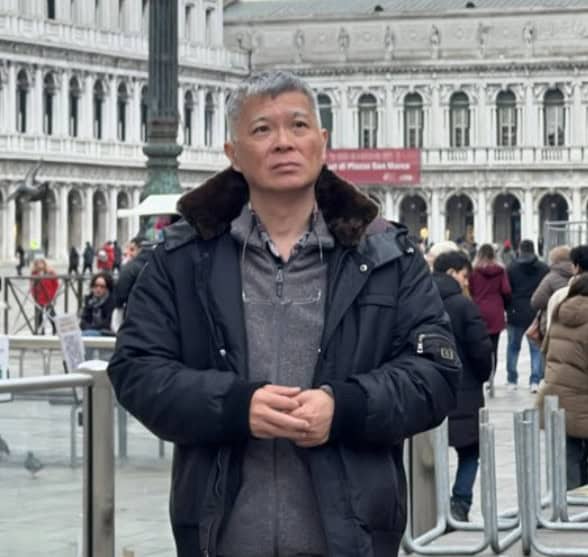
Michael Koh is a production specialist and entrepreneur who founded Spring Forest Studio in 2017 to provide event and virtual production solutions in Singapore. He specialises in hybrid live streaming, XR (Extended Reality) virtual production, and studio systems integration, transitioning the business from traditional videography to advanced corporate broadcasting. Operating out of a dedicated facility at NordCom2 in Singapore, he leads a technical crew to deliver multi-camera webcasts, digital sets, and technical consultations for large-scale corporate events.