
Extended Reality, or XR, has moved from a novelty layer in broadcast environments to a practical production model for enterprise events, product launches, executive town halls, investor presentations, and training programs. For corporate event planners and production teams, the sustainability case is no longer only about visual novelty. XR production can materially reduce travel, simplify logistics, and consolidate technical operations while preserving the impact of a high-end stage presentation. When it is engineered correctly, XR creates a repeatable, scalable, and measurement-friendly event format that supports both in-room and remote participation without the carbon and operational burden of moving large teams, set pieces, and talent across regions.
The sustainability argument for XR production is strongest when viewed through an enterprise infrastructure lens. Traditional multi-city event roadshows, satellite crews, and large scenic builds require freight movement, venue buildout, generator capacity, local labor mobilization, and often repeated international travel by executives, presenters, and specialists. XR reduces many of those dependencies by centralizing content creation, virtual set execution, and transmission workflows. In a hybrid event environment, that means a smaller physical footprint, lower transport emissions, fewer room turnarounds, and a more controllable technical chain from camera to display. For organizations with sustainability targets, particularly those reporting under corporate ESG frameworks, this operational compression is not just efficient, it is strategically relevant.
How XR Production Reduces Travel Without Reducing Production Value
XR production combines live cameras, real-time rendering engines, media servers, and display pipelines to place presenters inside a digitally generated environment. Instead of building large physical scenic elements, the production uses LED volumes, chroma key workflows, or mixed reality stages to create spatial depth and branded environments. The result is a high-impact visual presentation that can be executed from one controlled production site rather than many distributed locations.
Centralized production replaces distributed event logistics
In a conventional corporate event rollout, each regional activation may require local venue scouting, truck pack planning, equipment freight, and crew travel. XR consolidates these variables. One production hub can serve an APAC leadership summit, a global sales kickoff, or a product announcement distributed across offices and remote audiences. Presenters, on-camera executives, and production staff can be brought into a single calibrated environment, while remote speakers join over enterprise-grade contribution links. This model is especially effective in Singapore, where regional headquarters often coordinate events for Southeast Asia, India, and wider EMEA or APAC audiences from a single operational base.
When fewer people travel, emissions linked to air transport, hotel use, ground movement, and temporary venue infrastructure decrease. More importantly for production teams, schedule risk decreases. Flights, customs delays, and regional equipment duplication are reduced because the core show environment stays fixed. In practice, this allows technical directors to pre-engineer the signal path, validate color matching, and lock latency budgets before the event cycle begins.
Lower physical footprint, higher technical density
XR stages often concentrate more technology into a smaller area. That includes LED processors, render nodes, genlock distribution, camera tracking systems, video switchers, audio consoles, intercom matrixes, and monitoring walls. While the technical density is higher, the spatial footprint can still be far smaller than a large scenic build plus multiple breakout rooms and freight zones. For sustainability planning, smaller floor loads, fewer truck rolls, and less disposable scenic material are meaningful reductions. The environmental benefit is amplified when scenic assets are reused across multiple campaigns or virtualized into a library of digital set extensions.
Technical Architecture for Sustainable XR Event Production
A sustainable XR workflow depends on engineering discipline. The goal is not simply to replace a physical set with a digital one. The goal is to design a production architecture that minimizes waste, maximizes reuse, and maintains broadcast-quality output for corporate stakeholders and remote viewers.
Camera, tracking, and rendering pipeline
Most enterprise XR productions rely on live cameras paired with real-time rendering engines such as Unreal Engine or equivalent media-server ecosystems. The camera system is usually a multi-camera setup with SDI, or in some hybrid control rooms, SMPTE ST 2110 IP workflows where infrastructure is already mature. Tracking is essential because camera position data must be synchronized with lens metadata and rendered perspective. Tracking can be optical, mechanical, infrared-based, or hybrid, but it must remain stable under live production conditions.
For enterprise reliability, production teams should lock camera genlock across the chain to maintain frame coherence and prevent drift between rendered background and foreground talent. Synchronization is critical when delivering to LED walls or compositing with green screen. If the stage includes a programmable LED volume, the display processor must maintain accurate refresh alignment to avoid moiré, scanline artifacts, and tearing. These are not cosmetic issues only. In a corporate executive event, they directly affect perception of quality and brand credibility.
Signal flow and routing requirements
A robust XR stage relies on clean signal routing. Typical video paths include camera outputs into the production switcher, program outputs into encoder chains, auxiliary feeds into multiviewers, and reference signals distributed to cameras, media servers, and LED processors. SDI remains common in many production environments because of its operational simplicity and reliability. In more advanced facilities, NDI, specifically NDI|HX for bandwidth-sensitive paths or full-bandwidth NDI for higher-quality IP contribution, can support flexible routing if network design is mature. For long-distance contribution or remote guest ingestion, SRT, Secure Reliable Transport, is a strong option because it adds packet loss recovery and encryption while traversing unmanaged networks.
Enterprise teams should treat the XR signal chain as a system of interdependent layers. Video acquisition, graphics rendering, audio mixing, and network transport all influence sustainability because unstable systems cause re-runs, overtime, freight rescheduling, and energy waste. Each failed rehearsal or live event recovery consumes time and power. Building for signal integrity from the beginning supports both production quality and resource efficiency.
Audio architecture for hybrid XR events
Audio is frequently underestimated in XR sustainability discussions, yet it is central to audience engagement. A clean audio mix reduces the need for repeated takes, patch fixes, and post-event rescue work. Corporate XR events typically use digital audio consoles with integrated routing, AES67 or Dante audio-over-IP where applicable, and dedicated talkback systems between camera operators, graphics, vision mixing, floor management, and executive liaison teams. The program feed should be balanced for speech intelligibility, with adequate headroom and controlled dynamics for remote platforms such as Microsoft Teams, Zoom, or Webex when those are part of the hybrid distribution plan.
Because hybrid events often route one audio mix to the in-room PA and another to the remote audience, engineers should manage loudness and delay separately. Speech content benefits from consistent dynamics processing, while remote contribution feeds require lip sync alignment with video transport. This prevents the common issue where in-room attendees hear one timing reference and remote participants hear another. Proper delay compensation and confidence monitoring are essential for professional execution.
Hybrid Distribution, Encoding, and Enterprise Platform Integration
XR production gains sustainability value when one studio feed serves multiple audiences and platforms. Instead of creating separate physical events for in-person and remote participants, the production can distribute a single master program through enterprise collaboration systems, secure web portals, or managed broadcast endpoints.
Encoding standards and bitrate planning
Most corporate live streams still rely on H.264, with H.265, also known as HEVC, increasingly used where device compatibility and bandwidth economics justify it. For a 1080p corporate stream at 25 or 30 frames per second, production teams commonly design bitrate ranges that balance quality with network conditions. For higher-end 4K/UHD XR presentations, bitrate budgets need to scale accordingly, especially when the video contains motion graphics, camera movement, and detailed LED backgrounds. Encoding decisions should account for latency targets, audience device mix, and the fact that hybrid event streams may need multiple ladder profiles for different endpoints.
RTMP, Real-Time Messaging Protocol, remains widely supported for ingest, but it is not the only option. RTMPS adds encryption, which is important when streams traverse public networks or enterprise security zones. SRT is frequently preferred for contribution because it handles lossy connections more gracefully and supports secure transport. For closed enterprise infrastructures, ST 2110 can be used in conjunction with IP-based production systems, although it requires a carefully engineered network with deterministic bandwidth, timing, and packet management.
Platform interoperability for corporate audiences
Many enterprise events must integrate directly with Microsoft Teams, Zoom, and Webex. That creates a technical challenge because each platform has its own ingest expectations, latency behavior, and participant limits. XR workflows should therefore be designed with a master control distribution path and a platform-specific adaptation layer. The master feed may be produced in 1080p or 4K, then transcoded for the destination platform, with frame rate, audio channel count, and bitrate adapted to the service’s acceptance parameters. This avoids reconfiguring the production itself for every destination.
For sustainability, this matters because a single production can serve many outputs without rebuilding the event multiple times. An executive keynote can feed the main room, a global webcast, an internal leadership channel, and a partner briefing session with minimal additional physical overhead. The important part is operational discipline, including content naming conventions, endpoint testing, and backup distribution pathways.
Scalability, Redundancy, and Risk Management in Sustainable XR
Sustainability in live production is not only about carbon reduction. It also includes resource efficiency, fault tolerance, and avoidance of wasteful rework. A production that fails on show day creates emergency travel, expedited freight, and energy-intensive recovery procedures. Scalable XR design reduces those risks.
Redundancy architecture
Enterprise XR events should include redundancy at the critical path. That means dual power distribution where feasible, UPS-backed control racks, backup playback systems, mirrored encoders, spare cameras, and failover network paths. The production switcher should have a tested backup strategy, and if the stage design depends on a single render node, there should be a ready spare or at least a hot-standby plan with synchronized assets. Audio should also have failover paths for critical microphones and playback sources.
For larger shows, multiview monitoring is essential. Operators need confidence that every camera, graphics layer, and return feed is available in real time. Monitoring reduces the likelihood of visible errors that trigger remediation work, overtime, and repeat rehearsals. The sustainability gain comes from avoiding downstream corrections that would otherwise require additional labor and transportation.
Cloud-based versus on-premise control
Cloud production tools can reduce travel by allowing remote graphics control, asset management, collaboration, and approval workflows. They also support distributed teams that do not need to be physically present for every step. However, XR rendering itself often remains on-premise or at least on a dedicated local compute cluster because real-time compositing and display synchronization demand low latency and stable throughput. A practical enterprise design often uses a hybrid control model, with cloud-based planning, approvals, and asset delivery, and on-site or colocated rendering and switching for the live execution.
On-premise systems offer predictable latency and tighter integration with stage equipment. Cloud systems offer flexibility and reduce the need to fly specialists to every region. The right architecture depends on the event profile, security requirements, and whether the organization prioritizes centralized studio production or distributed regional enablement. In Singapore, where many enterprises run regional headquarters and shared services operations, this hybrid model is highly effective because it allows centralized technical oversight while supporting multiple audience geographies.
Implementation Guidelines for Enterprise Clients
To make XR production genuinely sustainable, enterprise teams should treat it as a repeatable operational platform rather than a one-off creative install. That means standardizing workflows, documenting signal paths, and building reusable templates for stage design, motion graphics, remote guest handling, and platform-specific streaming outputs.
Practical planning recommendations
- Define the event objective first, then determine whether XR will replace travel, scenic build, or both.
- Map the complete signal chain, from camera and audio acquisition to encoder output and destination platform handoff.
- Specify frame rate, color space, and resolution early, then keep them consistent across rendering, switcher, and encoder stages.
- Use SRT or RTMPS for secure remote contribution when network conditions or security policy require it.
- Validate audio delay, genlock, and lip sync during rehearsal, not during the live session.
- Build backup workflows for graphics, playback, power, and network transport.
- Reuse scenic assets, render templates, and control macros across multiple events to reduce re-engineering time.
Measuring sustainability impact
Organizations should quantify sustainability gains using concrete operational metrics. Useful measures include reduced travel headcount, lower freight volume, fewer venue build days, decreased power draw from temporary scenic construction, and reduced disposal of physical set materials. When reporting internally, connect those operational metrics to event count and audience reach. A single XR production that serves multiple markets can often replace several smaller physical productions, which makes its sustainability impact much stronger than a single-room comparison suggests.
For enterprise decision-makers, the strategic value is clear. XR production does not merely make an event look more advanced. It can make live communication more efficient, more scalable, and materially less dependent on travel-intensive logistics. When supported by disciplined engineering, broadcast-standard signal flow, secure transport protocols, and hybrid platform integration, XR becomes a practical sustainability tool for modern corporate communications. The most effective deployments are those that balance creative ambition with technical precision, allowing organizations to increase production impact while reducing the operational footprint that traditional event models require.
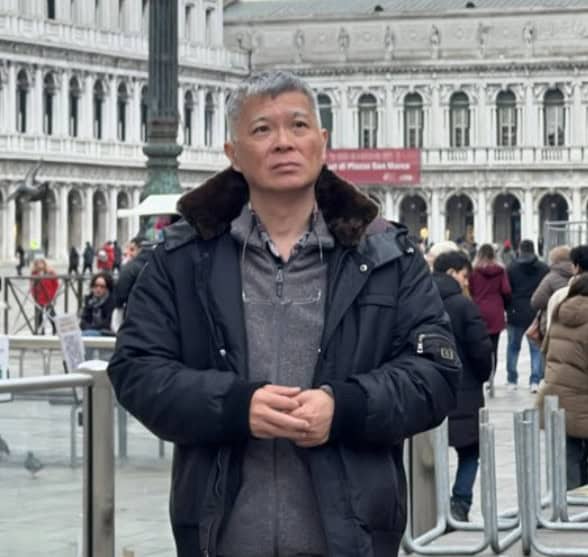
Michael Koh is a production specialist and entrepreneur who founded Spring Forest Studio in 2017 to provide event and virtual production solutions in Singapore. He specialises in hybrid live streaming, XR (Extended Reality) virtual production, and studio systems integration, transitioning the business from traditional videography to advanced corporate broadcasting. Operating out of a dedicated facility at NordCom2 in Singapore, he leads a technical crew to deliver multi-camera webcasts, digital sets, and technical consultations for large-scale corporate events.