Singapore has built a global reputation for precision engineering, research density, and high-trust innovation environments, which makes it an ideal setting for STEM showcases that must communicate scientific rigor to stakeholders in real time. For corporate event planners, AV professionals, production managers, IT directors, and enterprise decision-makers, streaming a laboratory demonstration, research presentation, or scientific showcase is fundamentally different from producing a standard conference session. The workflow must preserve signal integrity, protect sensitive environments, support hybrid participation, and deliver low-latency, high-fidelity video and audio to both in-room and remote audiences. In a Singaporean lab environment, where facilities often combine controlled access, strict network governance, and highly specialized instrumentation, the production design must align with enterprise IT policy, broadcast-grade engineering, and operational safety requirements.
A successful STEM showcase is not simply a live stream. It is an integrated production system that captures microscopy feeds, bench demonstrations, instrument telemetry, presenter narration, panel discussion, and audience Q and A, then distributes that content across physical screens, collaboration platforms, and external viewing endpoints. The technical challenge is to combine live event production technology with hybrid event streaming infrastructure while maintaining color accuracy, lip-sync, protocol compatibility, and resilience against network degradation. The production architecture must support multiple camera sources, routing between SDI and IP video, failover encoding, and secure transport over corporate WAN or managed internet circuits. In a Singapore context, the same stream may need to serve a university auditorium, an enterprise boardroom, a government stakeholder briefing, and a remote research partner overseas, all with different bandwidth and latency expectations.
Production Design for Scientific Demonstrations in Controlled Lab Environments
Scientific showcases place unusual demands on camera placement, lighting control, audio capture, and signal routing. Many laboratories are not designed like conventional event venues, so the production team must work within restricted floor plans, sensitive work surfaces, and strict safety protocols. This makes pre-production engineering critical. The objective is to produce a clean program feed without interfering with experiments, instrumentation, or personnel movement. In practice, that means creating a camera plan that accounts for line of sight, reflective surfaces, safety zones, and the need to isolate production equipment from lab processes.
Camera systems, optics, and framing strategy
For lab showcases, a multi-camera configuration is the standard. A typical deployment may include a locked wide master shot, a presenter close-up, an overhead or top-down camera for bench demonstrations, and a detail camera for instruments, samples, or display screens. The exact optical choice depends on the working distance and subject size. PTZ cameras are effective for remote-controlled framing in constrained spaces, while broadcast-style fixed cameras deliver better operator control and superior image consistency. When macro detail matters, such as in microscopy support or microfluidic demonstrations, a dedicated imaging path may be required to feed the live production switcher from scientific display hardware.
Where image transport must traverse longer distances or tight cable paths, baseband Serial Digital Interface, or SDI, remains a reliable option for professional camera chains. In parallel, Network Device Interface, or NDI, and NDI|HX can be deployed where IP video simplifies routing across a managed network. For Singaporean enterprise campuses with mature IT infrastructure, NDI can reduce the amount of point-to-point cabling, but it must be engineered with multicast awareness, switch configuration, and bandwidth segmentation. Full NDI carries higher bitrate demands, while NDI|HX reduces bandwidth through more compressed transport, which can be useful in dense facilities or multi-room hybrid workflows.
Lighting, color management, and visual fidelity
Scientific demonstrations are unforgiving of poor illumination. Accurate depiction of materials, textures, indicators, and interface displays requires controlled color temperature and consistent exposure. LED fixtures with high color rendering index values are commonly used to ensure that fabrics, fluids, indicator lights, and lab surfaces appear natural on camera. Matching white balance across cameras is essential, especially when combining PTZ units, fixed broadcast cameras, and laptop or instrument outputs. For enterprise productions, the lighting plan should be documented as part of the technical rehearsal so that camera shading can be locked before the live event begins.
Color management also matters when scientific visuals are captured from external sources, such as presentation laptops, imaging systems, or medical and laboratory devices. The production team must confirm output resolution, refresh rate, and color space compatibility. Many presentation devices output at 1920 by 1080 at 60 Hz, while some scientific displays may run at different refresh rates or require scaling. Proper signal conversion and frame synchronization prevent tearing, moire, and unexpected latency in the program mix.
Hybrid Streaming Architecture for Enterprise STEM Events
Hybrid STEM showcases require a networked production system that can serve in-room attendees and remote participants simultaneously. The core design principle is separation of concerns. Video acquisition, production switching, contribution encoding, collaboration integration, and distribution should each be engineered as distinct functions. This approach improves reliability and gives IT and production teams clearer control over bandwidth, security, and monitoring.
Signal flow from source to distribution
A robust STEM streaming chain begins with source capture, which may include cameras, presentation computers, scientific instruments, and audio inputs from microphones or mixed feeds. These sources are routed into a production switcher, either hardware-based or software-defined, where technical directors manage transitions, keying, lower thirds, picture-in-picture layouts, and source selection. The program output then feeds an encoder for contribution to a primary streaming endpoint, while separate isolated feeds can be recorded as ISO recordings for post-event editing, compliance archiving, or repurposing into training assets.
For transport, Secure Reliable Transport, or SRT, is an enterprise-grade protocol well suited to unpredictable networks because it provides encryption, packet loss recovery, and adaptive transmission over public internet paths. RTMP, or Real Time Messaging Protocol, remains relevant for compatibility with certain platforms and legacy workflows, while RTMPS adds transport security through TLS. For higher control environments, contribution can remain on a managed private network before being distributed outward through a cloud-based content delivery layer. The correct choice depends on latency targets, operational complexity, and the degree of control the client wants over the signal path.
Latency targets and audience interaction
Hybrid scientific events often involve live Q and A, remote expert commentary, or moderated audience participation. In these cases, latency becomes a design variable rather than an afterthought. SRT and managed streaming paths can help reduce delay compared with overly buffered distribution layers, but each platform in the chain introduces its own processing time. A practical production target for interactive corporate events is often sub-five-second end-to-end latency, although the exact figure depends on the collaboration platform, encoder settings, and network conditions. When a session requires immediate interaction, the team should prioritize deterministic routing, stable encoder profiles, and tightly controlled content distribution architecture.
If the event uses Microsoft Teams, Zoom, or Webex for hybrid participation, the production team should define a bridge strategy before the show. That may involve a virtual meeting producer joining the platform, a dedicated hardware or software decoder, or a feed-from-production model where the mixed program is delivered into the platform as a single clean stream. For more advanced use cases, a return feed can be sent back into the venue for remote speakers or panelists so they can monitor the live show with confidence.
Enterprise Encoding, Protocol Selection, and Streaming Quality Control
The choice of encoding profile directly impacts visual quality, bandwidth efficiency, and platform compatibility. For STEM content, where fine details such as text overlays, instrument readouts, and sample structures must remain legible, the production team should avoid overly aggressive compression. High-efficiency video coding, or H.265, can reduce bitrate compared with H.264, but H.264 remains widely supported and operationally simpler across enterprise platforms. The correct selection depends on whether the priority is low latency, broad compatibility, or maximum compression efficiency.
Bitrate management and codec strategy
For 1080p productions, bitrates often fall in a range that balances clarity and transport stability, while 4K, or UHD, workflows require significantly more capacity and stronger encoder hardware. The production team should test motion handling, text clarity, and scene complexity under real event conditions. Lab demonstrations often include small-object motion, reflective surfaces, or detailed diagrams, which can expose compression artifacts if bitrate is undersized. Constant bitrate and variable bitrate modes each have implications for contribution and delivery. Constant bitrate simplifies network planning, while variable bitrate can improve efficiency but may demand more headroom in the transport path.
When enterprise clients demand consistent quality across multiple endpoints, multi-bitrate streaming or adaptive bitrate delivery can be used for remote audiences. However, the production master should always originate from a clean, well monitored program feed. The encoder should be configured with stable key frame intervals, appropriate audio sampling, and conservative network margins. In scientific sessions, visible degradation in charts, slides, or laboratory visuals reflects poorly on both the host institution and the production partner.
Monitoring, multiview, and confidence workflows
Multiview monitoring is essential for live scientific showcases. The technical director must see camera sources, program output, audio meters, return feeds, and distribution health in one control surface. In addition to the multiview display, separate confidence monitors should be positioned for presenters, panelists, and in-room attendees where needed. Audio monitoring should include program mix, isolated microphone channels, and any embedded reference tones or loudness measurements. A disciplined monitoring workflow reduces the risk of unnoticed clipping, muted sources, sync drift, or accidental source loss during critical moments.
Audio Engineering, Routing Architecture, and Redundancy Planning
Audio quality is often the difference between a technically competent stream and a professional one. Scientific content may involve soft-spoken researchers, audience questions from different distances, or the need to capture instrument sounds and demonstrations. A hybrid event therefore requires a deliberate microphone strategy, gain staging plan, and signal routing architecture. Wireless lavalier microphones, handheld microphones, boundary microphones, and direct feeds from playback devices all need to be managed within a coherent mixing environment.
Microphone design and acoustic control
In lab settings, acoustics can be challenging because of hard surfaces, HVAC noise, and equipment hum. Directional microphones and close-miking practices help improve speech intelligibility. The mix engineer should use high-pass filtering where appropriate, manage noise gates carefully, and verify that compressor settings do not alter the natural character of scientific presenters. If the event includes technical dialogue between speakers in different locations, talkback systems should be established for stage management and production coordination. This is especially important when remote contributors are joining from other campuses or overseas facilities.
For corporate events with higher stakes, analog backup paths and digital redundancy should be part of the audio plan. The main audio path can be embedded in SDI or transported over IP, but backup recording should remain independent where possible. If a primary processor, console, or network path fails, the show must continue without audible interruption. That level of resilience is expected in enterprise production environments.
Failover and business continuity
Redundancy in live streaming is not optional for mission-critical STEM showcases. At minimum, teams should define failover for power, network, encoding, and recording. Uninterruptible power supplies should support core control equipment, while dual network paths can reduce the impact of a circuit outage. For high-value programs, a secondary encoder, alternate internet path, and backup recording system provide meaningful continuity. The production architecture should also account for a fallback distribution method, such as a secondary meeting platform or alternate cloud ingest point.
In Singapore, where enterprises often operate in highly regulated and security-conscious environments, network segmentation and access control are particularly important. Production VLANs, firewall rules, and credential management should be coordinated with the client’s IT team long before event day. Secure transport, role-based access, and auditability are not optional requirements in enterprise streaming infrastructure.
Cloud-Based Versus On-Premise Deployment Models
There is no single correct deployment model for scientific event streaming. Cloud-based solutions offer elasticity, remote accessibility, and easier scaling for distributed audiences. On-premise systems provide tighter control, lower dependency on external services, and easier alignment with sensitive data policies. Many Singaporean enterprises adopt a hybrid architecture that places acquisition and local switching on site while using cloud distribution for remote delivery and collaboration.
When cloud distribution makes sense
Cloud distribution is effective when the event must support many remote endpoints, multiple geographies, or post-event content workflows. It reduces the burden on local infrastructure by moving audience scaling into the delivery layer. This is useful for regional STEM showcases where external institutions, partners, or internal stakeholders are joining from different networks. Cloud transport also simplifies dynamic access control and platform integration for large corporate programs.
When on-premise control is preferred
On-premise control is often chosen when the client requires strict governance over source material, internal bandwidth, or private event handling. For confidential research demonstrations, early-stage innovation briefings, or sensitive prototype reviews, keeping production switching and recording within the facility can reduce exposure. In these situations, the production team may still use cloud tools for registration, analytics, or remote collaboration, but the core media path remains local and controlled.
Implementation Recommendations for Enterprise STEM Showcases
The most reliable STEM showcase workflows begin with a technical discovery phase. The production team should assess venue topology, network availability, lab restrictions, source devices, speaker requirements, and audience split between physical and virtual participants. A pre-event engineering checklist should verify frame rates, audio levels, camera exposure, platform credentials, and failover paths. The rehearsal should include camera shading, source switching, playback testing, and a complete end-to-end stream validation. For events in Singapore, where operational standards are high and expectations for precision are exacting, a disciplined rehearsal process is the strongest predictor of success.
- Use SDI for deterministic camera transport where long cable runs or zero-tolerance reliability is required.
- Use NDI or NDI|HX where managed IP routing provides operational flexibility and network capacity is available.
- Choose SRT for secure, reliable contribution across managed or public internet links.
- Maintain H.264 compatibility for broad platform support, and use H.265 where codec efficiency is justified and endpoint support is confirmed.
- Design for at least one redundant path in power, network, encoding, and recording.
- Integrate Teams, Zoom, or Webex early in the production design so latency, speaker return, and participation workflows are tested before the live event.
- Document all routing, audio gain structure, and switcher presets so the production can be repeated or scaled for future corporate showcases.
Singaporean labs showcase the kind of precision, discipline, and innovation that enterprise audiences expect to see delivered without compromise. When streaming architecture is engineered correctly, the result is more than a broadcast. It becomes a credible scientific communication platform that preserves technical detail, supports hybrid collaboration, and reflects the professionalism of the institution behind it. For organizations that need to present STEM excellence to internal stakeholders, partners, regulators, and global collaborators, a robust live streaming and hybrid production framework is the foundation that makes the showcase work at enterprise standard.
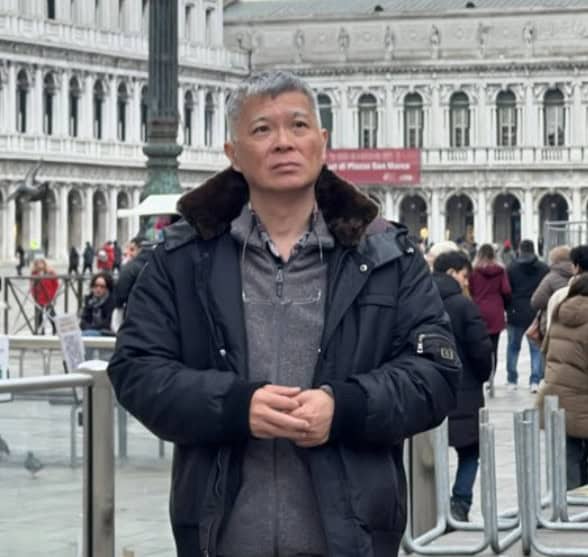
Michael Koh is a production specialist and entrepreneur who founded Spring Forest Studio in 2017 to provide event and virtual production solutions in Singapore. He specialises in hybrid live streaming, XR (Extended Reality) virtual production, and studio systems integration, transitioning the business from traditional videography to advanced corporate broadcasting. Operating out of a dedicated facility at NordCom2 in Singapore, he leads a technical crew to deliver multi-camera webcasts, digital sets, and technical consultations for large-scale corporate events.